

I was once asked during a TV interview what Humanitas Press means to me. Taken by surprise, I said the first thing that came to mind: one of the positive characters in a story. I’ve been with it since the beginning, first as a simple reader, then as an editor, the series coordinator of gems of world literature, and now as a writer. I’m extremely grateful for all of this.
What constitutes Humanitas as a character? Like the librarian in Arcimboldo’s painting, he is made of books, thousands and thousands of books. The creator of this newly free person made of written pages is the philosopher Gabriel Liiceanu. The press’s founder has admitted repeatedly that he wanted, at first, to bestow his personal library on his country. He did much more than that: he bestowed on all of Romania books from the world’s great library, and opened pathways for the world to receive the books of representative Humanitas authors such as Mircea Cărtărescu, to name only the best known. And something else, just as important: he modeled and cultivated the finer taste of freedom, one of the press’s mottos.
Until 1990, we lived in a world in which absolutely all new books were censored, and part of the old ones were banned, removed from libraries, and read only in secret. We lived in a totalitarian world where a borrowed book could land you in prison. Only two months after our regime changed, when Humanitas was founded on February 1st, we all discovered “freedom isn’t a right, it’s a duty,” as Berdyaev said. And the press’s founder, who led it for 35 years, knew no better place of freedom existed than a book. For the simple reason that books offer freedom of the highest quality, involving education, intelligence, altruism.
I first encountered a Humanitas book right in 1990, in a fairly modest window display that solemnly announced: BOOKSTORE—and, in a slightly larger font, HUMANITAS. It was a new name in the Bucharest lexicon and I liked it from the start. On the other side of the window, a narrow counter crowded with books. The rented space was small and unsuitable, and only the names on covers that were still porous and paltry caught your eye: Emil Cioran, Monica Lovinescu, Virgil Ierunca, Eugène Ionesco, Paul Goma, Mircea Eliade and others, all banned before 1990. Exiled writers whose books I had never held except, at most, through clandestine loans. Veritable myths, embodied back then in people who were still alive. I was young and poor. I hesitated a great deal, inversely proportional to how little money I had, and finally made up my mind and took my chosen book to the register.
“On the Heights of Despair,” the bookseller observed. “You’ve made a terrific choice!”
I didn’t know whether she was being sarcastic, so I smiled ambiguously, in a way that could’ve suited either situation. So, I had just turned thirty years old when the character named Humanitas entered my life and library. The title I had chosen was, in fact, a talisman: whenever I’ve been in despair, sometimes even “on the heights of despair,” Humanitas books have helped save me. The new press’s logo, so symmetrical and stable, the letter H supported by a figure with outstretched arms, reminiscent of Leonardo’s man, of a Renaissance uomo universale, a πολυμαθής, would support me from that point forward on life’s difficult and fraught road.
Today, 36 years later, I realize Humanitas could have disappeared, like so many other institutions that appeared in 1990, after only a few months or years. The cultural face of Romania, and my own literary face, would have been different. In the dawn of its existence, when I followed its every book and every event, along with thousands of other readers, I had no way of knowing it would remain a permanent presence in my life. Of all the presses, new and old, it’s the only one whose architecture I have understood completely. I became emotionally and intellectually attached to it in 1990 and, and here I am, still attached to Humanitas even now. It’s no merit of mine: I have a faithful nature. We helped each other be that way.
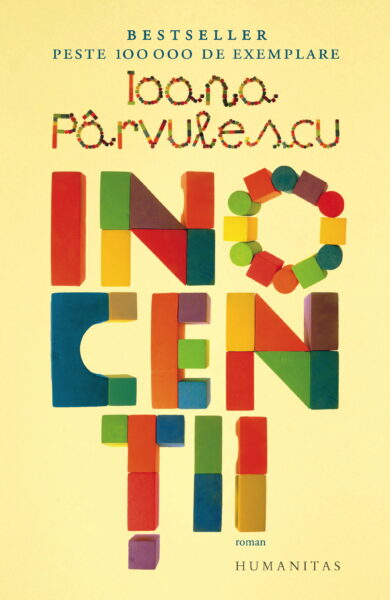
I like going to bookstores the way some people like going to restaurants, and I was glad Humanitas created a chain of wonderful bookstores in Bucharest and other big cities in Romania. For a reader, Alberto Manguel—one of the world’s greatest book connoisseurs, who worked as a teenager in a bookstore Borges frequented—says, every volume is a universe before its making, it floats “in a fog of possibility,” until “the hands that open it and the eyes that peruse it stir the words into awareness.” I think that’s why I have always envied the job of booksellers. The people who do it witness the births of dozens of galaxies every day. Libraries sell cosmoses, possible worlds. Every time I write about bookstore people and their need of books, I do it in the name of my longstanding imaginary career as a bookseller.
Thanks to all the Humanitas bookstores and the hundreds of book launches I’ve attended or participated in, I’ve come to understand what makes Humanitas different from other important presses in our country. This press isn’t conceived of as a regular business, but as an act of culture. I hope with all my heart it will remain that way, that it won’t end up thinking of its portfolio only in terms of likes, like Facebook, or ratings, like stupid television stations, though I also realize you must practice the art of compromise, discussed by Amos Oz, if you want to survive in the book market. Humanitas still has a hierarchy, it fights for acts of culture, even if some titles aren’t marketable. Book launches are serious affairs, you learn more there than in a university class. All the books are promoted, but usually the most attention is given to the truly good ones. At this press, you can find the greatest number of writer-editors per square meter. During my European travels, I’ve quoted countless times a motto of the press first coined by Constantin Noica, the philosopher who mentored Gabriel Liiceanu: “You live as many lives as books you’ve read,” and it was always appreciated. How can you not ensure the best possible lives for yourself? We lived these lives by reading Humanitas books.
I feel I too am a cell in the Humanitas organism, a small part of this character (a positive one, as I was saying) without whom, after 1990, the world of books would have looked more dismal. Humanitas has values, humanist values, like those defended by Settembrini against Naphta in The Magic Mountain. A full list of all Humanitas’s values should be drawn up, and it must definitely include the love of beauty, goodness, and truth—the ideal of the ancient Greeks, καλοκαγαθία.
I don’t know if a scale exists for what is intangible, for the exchange between a person and a book, but Humanitas writers try to open the world as if it were a book and open themselves up to the world like the pages of a book. I too have tried to be a bridge between Humanitas and the rest of the world. I’ve gladly accepted every “challenge” that came from Humanitas. I’ll try to outline some of the values Humanitas has been instilling, for so many years, into daily life in Romania:
. Continuity.
In Romanian literature (and in the Balkans in general), there’s a legend about a building that is raised during the day that collapses every night. The structure won’t hold until someone sacrifices themselves for it. Beginning with its founder, Gabriel Liiceanu, continuing with directors Lidia Bodea and Denisa Comănescu, and recently, with Ștefan Liiceanu and Cristina Bogdan, and then with a handful of talented people on the Humanitas team, and with Humanitas writers, everyone has strived so that this building will last. And, indeed, what is built during the day, lasts at night as well, when you sit and read by lamplight—these words should be understood metaphorically as well, in the spiritual realm, with its moments of light and twilight. In a world where even miracles last only three days, as a proverb says, behold, for 36 years Humanitas has been bringing books into the light. I can assure you it’s not a small thing.
. People-books.
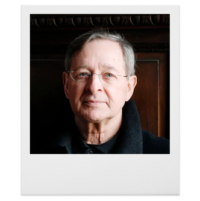
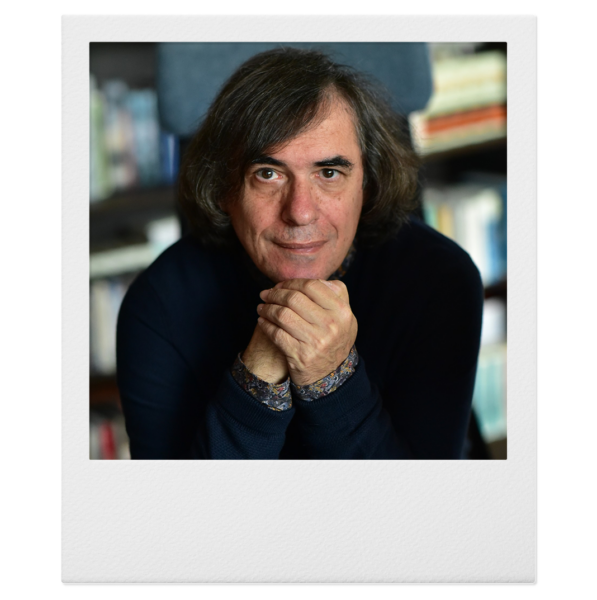
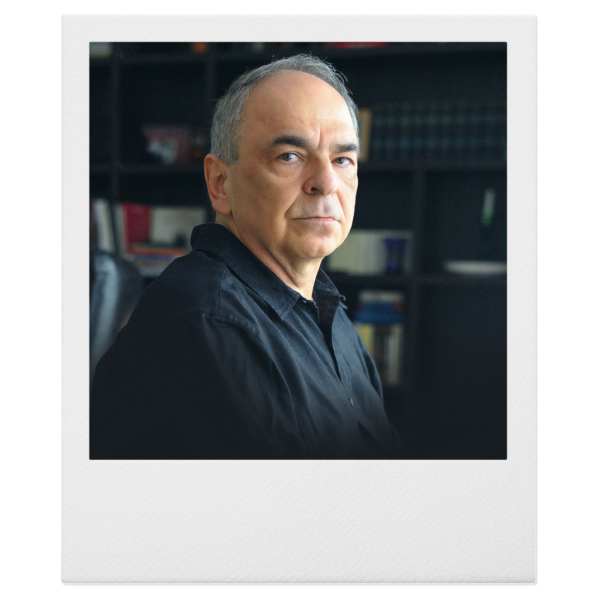
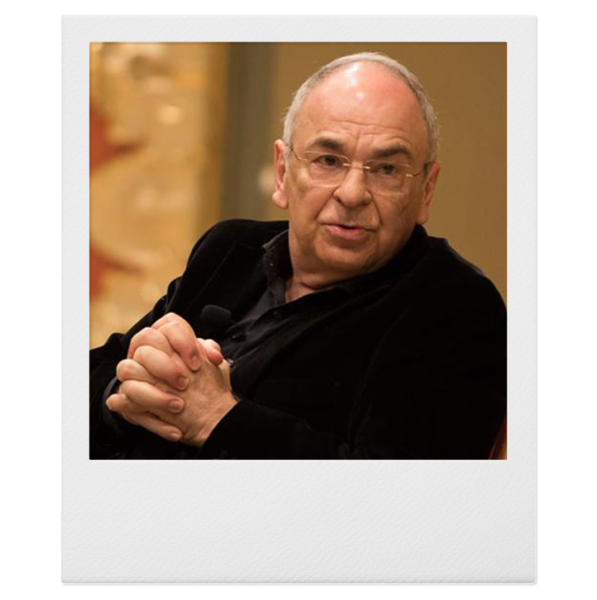
Humanitas has published over 2,000 authors from every era and throughout the world, with several books by each, of course. I’ll name, in random order, only a few of the ones I’ve gotten to know as people, as well as in their book form: Annie Bentoiu, Mircea Cărtărescu, Neagu Djuvara, Andrei Pleșu, Petru Creția, Ana Blandiana, Lucian Boia, Monica Lovinescu, Virgil Ierunca, Horia-Roman Patapievici, Dan C. Mihăilescu, Radu Paraschivescu, Vlad Zografi, Alexandra Furnea, Ioana Nicolaie, Tania Radu, Cristina and Cătălin Cioabă, Cătălin Vasilescu, Cătălin Pavel, Victor Ieronim Stoichiță, Monica Pillat, Andrei Cornea, Alina and Șerban Pavelescu, Andrei Scrima, Valentina Sandu-Dediu, Gabriela Tabacu, Tatiana Niculescu, Matei Călinescu, Ion Vianu, Vlad Russo, Cristian Preda, Ioan Stanomir, Dan-Liviu Boeriu and so many others. Of course, I’ve also had the privilege of knowing Gabriel Liiceanu, the press’s primum movens. Among the foreign authors published by Humanitas and Humanitas fiction, I’ve been fortunate to get to know, not only read, Mario Vargas Llosa, Ludmila Ulițkaia, Amos Oz, Herta Müller, Narine Abgarian, Jan Koneffke, David Foenkinos, Alessandro Baricco, Rui Zink, and others whom I met only briefly at book launches.
. Marks
The marks Humanitas leaves in each of its readers are of different shapes and sizes. But it leaves its mark in all of us, even in people who don’t read. One of the secrets of books is that they pass on their values in many different ways.
. Diversity
We don’t all want the same things from people, nor from life, nor from books. Some read to stay up to date, others out of habit, out of boredom, some out of passion, with pleasure, with good will and willingly, others just out of necessity. The important thing is that between the covers of Humanitas books lies the power to meet each of them. To bring people together, with all their differences. To guide them on their unique paths.
. Tradition and innovation
Like Janus, Humanitas has one face looking back, beginning with Homer, Plato, Seneca, Marcus Aurelius; and the other, of contemporary authors, faces the future. One face looks toward creations from our country, our little corner of the world, and the other, toward translations from the entire world. One toward the humanities and arts, and the other toward the sciences, history, psychology.
. Immortality
Books enable us, as it has been said, to be contemporaries with those who have long left this world. In this way, they, but we as well, are immortal: we live forever. Humanitas books have given me the opportunity to listen to many people with whom I would’ve loved to share an era and spend time.
. Metamorphosis
A press gathers together all the changes it creates in its readers. If it doesn’t create change, it is a failed encounter with the book. And yes, a press can change the world.
. One step ahead
You look for it here, but it’s always a step ahead of where you expected. Or maybe Humanitas is simply a discreet tuning fork that provides the pitch for the great orchestra of books in Romania.
. Host, receiving and feasting
Readers visit it and feast (in the year 593 BC, a prophet, Ezekiel, was the first to have a vision in which he was commanded to eat a book), ingesting the meanings of its books.
. Extending a hand toward strangers
It also clasps it, if they are willing. It gives them joys. It makes them read together.
. Talent, patience
Somewhere, within its invisible walls, are all its ideas, talent, patience, and everyone’s work at Humanitas, regardless for how long or short a time: writers, translators, editors and copyeditors, cover artists, proofreaders, booksellers, accountants, book distributors, secretaries, drivers, and everyone else.
. Uprightness
What does that mean? That its spine has remained intact over time. Though it’s still young, of course.
. It both resembles us and doesn’t
A bit of everyone who reads Humanitas books returns to it, and it continually forms us.
. It obliges us
It compels us not to “freeze up in our own project” (the definition of stupidity given by the press’s founder and leader, Gabriel Liiceanu).
. It gives us freedom
It teaches us the lessons of freedom through books: you choose, read with your own mind, think for yourself. That is the starting point of freedom, pure and simple.
. It gives us lives
As many lives “as books I’ve read,” and perhaps as many as I’ve written for it. A press has as many lives as books it has published.
“Would you die if you were forbidden to write?” Eugène Ionesco was once asked, echoing Rilke’s famous question. “No, of course not. But I would feel terrible about it…” he answered. Would I die without Humanitas? No, of course not, but life would be much drabber and we’d feel terrible about it. Just like people and like water under a bridge, a press passes on, at some point. But its books remain, like the reusable stones in a building.
I believed in its purpose. Humanitas knew better than any other press here how to admire people and how to turn that admiration beautifully into books. How to adapt, but without losing its initial contours and purpose. It overwhelmingly chose books that last, books that I, for one, keep on the top shelf of my personal library. It knew how to stimulate the creativity of its authors and the public’s love. It remembers. It has presence. It has style. It has a name that shows direction. It has a mind and heart, and literature, science, and art. It knows how to laugh. It’s independent. And yes, it’s an important character in the story of our freedom.
Translated from Romanian by Monica Cure.
1 Emil Cioran (1911-1995), Pe culmile disperării, 1934
2 A Reading Diary, 2005.