

A Conversation with Gabriel Liiceanu
Christian Longchamp
Over the decades, which have often been difficult for your country since the fall of Ceaușescu’s dictatorship in 1990, have you hoped to make Humanitas a form of countervailing power: a community of free minds, enriched by literature and animated by a strong sense of civic responsibility, standing firm against the excesses of public life and the rampant commodification of culture?
It is strange to speak of a countervailing power when, in December 1989, Romanians were convinced that they had experienced a revolution: they had emerged from communism and, after half a century, entered the long-dreamed-of world of democracy. Formally speaking, that was indeed the case: the new political regime had been established on the basis of a new Constitution, adopted in November 1991, which provided for all the institutions of a democratic society. Yet this democracy had one flaw: it was a democracy without memory. The Constitution was new and, formally speaking, democratic, but the prevailing mindsets and reflexes of government were old; for the most part, they had been inherited from the elites of the communist regime. One cannot escape the quagmire of history without confronting it and coming to terms with what one has lived through. It is impossible to emerge from a historical catastrophe without facing the past.
This is where the ambiguity surrounding the legitimacy of the regime led by Ion Iliescu originates. A former communist who had held senior positions (he was a member of the Central Committee of the Romanian Communist Party from 1969 to 1984, and subsequently first secretary of the Party’s county committee in Iași), Iliescu crossed over to the other side of history, bringing with him all the repressive institutions of Ceaușescu’s regime, foremost among them the notorious Securitate, as well as the entire apparatus of the Communist Party. From that moment on, Romania entered a state of exception: the regime led by Iliescu, operating under the banner of a party created ad hoc and grandly named the “National Salvation Front,” hastily donned the new clothes of a makeshift democracy, draped over a body that had not had time to wash itself before putting them on. This is the source of the lingering remnants of Romanian communism, from which Romanians have still not managed to rid themselves today, and which help explain Romania’s position at the very bottom of European rankings.
Hence, my answer to your question is “yes”: in a social environment steeped in communist ideology and manipulated through the methods of the former Securitate – the mineriads, the violent interventions by miners in political life, death threats, lists of intellectuals who “disturb the peace of the country” and supposedly deserve to be shot in stadiums, relentless smear campaigns, the ransacking of institutional headquarters, and so on – the greatest challenge was to bring into being “a community of free minds […] animated by a strong sense of civic responsibility and standing firm against the excesses of public life.”
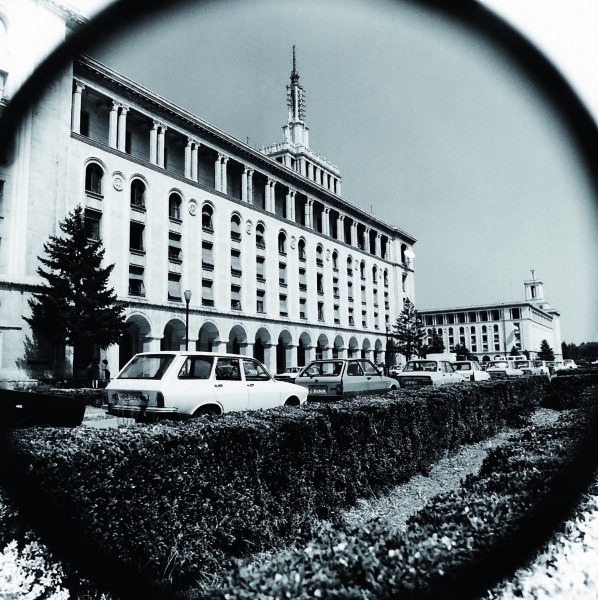
Another constant difficulty Humanitas has had to contend with over all these years has been navigating an economic environment riddled with corruption. I am continually astonished that Humanitas has reached the age of thirty-six, given that, from the outset, the publishing house pledged its allegiance to the principles of economic liberalism, respect for the rule of law, and business ethics. Hannah Arendt said that a miracle should be defined as the emergence of something new in a world where everything seems frozen, set in stone. It is no small thing to begin to believe that I have spent nearly a third of my life living through a miracle.
When you look back on the thirty-six years of your publishing house’s existence, its symbolic stature in the Romanian publishing landscape, and the extraordinary richness of its catalogue, do you nevertheless have any regrets?
The answer is simple: I regret the authors I would have liked to publish but never had time to bring out, and who were snapped up by other publishing houses. I also regret certain unfortunate choices. I detest graphic novels for adults, and through my own negligence, two books of this kind found their way into the publishing house’s catalogue. I also regret having published a few authors whose subsequent evolution on the public stage has saddened me.
Throughout all these years, I have lived among the most distinguished authors of our culture. And I can say that I have known some fine intellectuals: men in whom creative genius is intertwined with greatness of character. But they are rare. And it is terribly painful to see genius and character go their separate ways.
As Kierkegaard observed, most writers and philosophers use their works to erect magnificent castles, while they themselves live, perfectly content with their lot, in a foul-smelling hovel. In his Culture and Value, Wittgenstein makes a terrible assertion: “Genius is the talent in which character expresses itself.” That is why, he adds, “one can have talent, extraordinary talent, and yet not have genius.” To possess both genius and character, he says, requires “not merely a skeleton of the intellect, but a whole human being. This is also why the greatness of what someone writes depends on everything they write and do.” And do.
That is why my greatest regret has been having to confront the inner workings of disappointing geniuses, finding myself compelled to separate the writer of genius from the petty little man who did the writing. To separate the giant from the dwarf, those two beings who shamelessly and scandalously inhabit the same skull and body, locked in an unnatural embrace. One soars heavenward in spirals of the spirit; the other, earthbound, greedy, arrogant, obsequious and ill-mannered, often serves at the court of Evil.
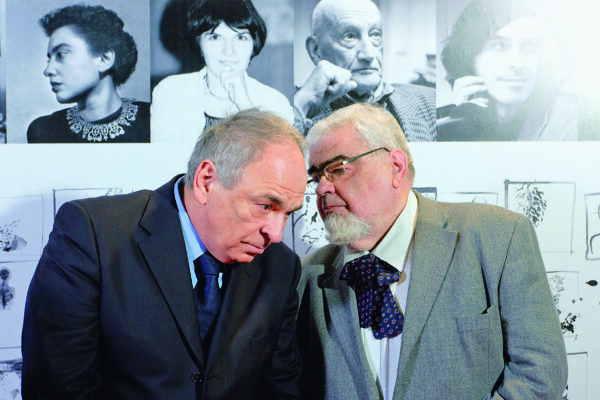
It is rare to encounter geniuses whose ordinary humanity one can bear while they are still alive. For the gift withdraws at once into the work, which emancipates itself from its author and acquires its autonomy even during the author’s lifetime. Once separated from the work, the author continues to move alone among his contemporaries; all too often, genius drives him out of his mind, just as power almost invariably leads politicians astray. He comes to believe that what makes him unique exempts him from any obligation to behave decently, and that he can conduct his life and his relationships with others however he pleases, according to his own whims.
Genius is the heaviest burden of all: an immense abundance of creative grace must rest upon the unpredictability of a human constitution in which, jumbled together with that grace, dwell all the pettinesses of the human soul. This is why, in the case of most geniuses, their passing comes as a welcome release: it frees their work from the outlandish carcass that once housed their gift.
In light of the spectacular decline in book sales, the state of society, the rise of populism, and even a certain nostalgia for the communist years that is spreading among some citizens, do you ever find yourself doubting the power of books and ideas? Has culture failed to transform your country in accordance with the dreams you and the intellectuals of your generation once cherished?
You touch me to the very core with this question, because my relationship with words is an ambivalent one. On the one hand, I believe that only books and words can save the world, since it is thanks to language and books that human beings did not remain in the caves of the Palaeolithic. Everything that each generation has produced that is best in the history of humankind could be passed on to succeeding generations only through books. The entire world has revolved around words.
Let me begin, however, by reminding you of the slogan that Humanitas has used since its very beginnings. It is an extraordinary formulation by my teacher Noica: “We have as many lives as we have read books.”
When the pandemic began, Humanitas launched a slogan ad hoc: “The world is closed? You can open a book.” I explained that, in this way, one could reopen the world. Someone writes a book, someone else reads it, and suddenly a world opens up. Thousands of worlds can open up in this way, allowing us to live thousands of lives, even when the world seems to have closed in on itself completely. Thanks to the miracle that is the book, we find one another again. We meet – how shall I put it? – above the world: we see one another solely through the eyes of the mind, and we shake hands without anyone seeing us do so.
But why can we say that the world has revolved, and continues to revolve, around words?
During an interview, I was once invited to take part in an exercise in imagination: “You find yourself among a group of teenagers who observe that the counter-values of politics, public administration, the media and show business are presented as values, as role models. They ask you why reading matters, when it is clearly possible to reach the top without education or merit counting for very much. What would you tell them? What arguments in favour of reading would you offer?”
I answered by returning to my favourite argument: by that logic, we might just as well live without washing ourselves. We can go through life smelling bad, speaking crudely, mangling words and wallowing in vulgarity. Is that really what we want? Would we not prefer a world in which we stopped barking at one another in the street, in shops and on buses? A world in which words were caressed?
But if that is how things stand, should not the mind, too, follow its own dietary regimen? Should it not be nourished with food of the highest quality? And its favourite dish is, of course, the book.
Alternatively, I might put a provocative question to them, appealing to the pride of youth. I would ask them how they wish to emerge from life: as chimpanzees or as demigods. I would tell them about all the unsuspected splendours the world contains, which only books can give us access to. I would explain how impoverished their lives would be if they confined themselves to a raw, immediate perception of things, instead of adopting a way of seeing that gathers all the world’s perspectives into a single eye.
I would speak to them about the eye of the mind, which, when carefully cultivated, discovers what escapes the first glance. The vision acquired through reading gives us access to a form of insight that ordinary, pragmatic, uncultivated, purely sensory vision cannot provide. Perhaps, to borrow Hölderlin’s words – “What if Oedipus had one eye more?” – we might find ourselves endowed with “an additional eye.”
There is something else, too: through reading, we can choose ourselves. We can shape our lives by taking as our models the characters who have won us over in the course of our reading, or by resolving to resemble as little as possible those we find repellent. This is what we mean when we say that reading is formative.
Of course, I have often been asked what the point of reading is in this world. I believe that the most important event of my childhood was my encounter with letters. At first, perhaps, I regarded them as a toy. I could hardly believe that, when put together, they became a kind of doorway through which I could enter a universe infinitely vaster than the life available to me, a life I quickly exhausted through the ritual gestures of each passing day.
As a child, I discovered immersive reading: that breathless kind of reading in which you allow yourself to be literally swallowed up, falling entirely into Jules Verne’s Twenty Thousand Leagues Under the Sea. Before the screen of the page, I found myself in a world like the one ruled over by Captain Nemo: a boundless world in which one could move freely in every direction, and transport oneself, at any moment, body and soul, wherever one wished. But in my case, it was not an ocean of blue waters teeming with thousands of strange creatures. It was the ocean of language.
I had begun to swim in this ocean, to breathe in this new world. My lungs were filling with words, but of course I had no idea what an extraordinary thing was happening to me. At school, words are stripped of their implicit background, and through constant use, no one is amazed by them any longer. We no longer even realise that the great miracle we human beings experience is that we have inhabited words.
Today, I find myself at the other end of life. After spending years searching for its meaning –
a single meaning for everyone, one that transcends each individual existence – I am beginning to believe that I have found it: language has been “given” to us. We have been given the gift of encountering words.
Perhaps most of us miss this encounter, leaving words as they are, “just as God gave them to us,” when our true calling consists precisely in carefully extracting them from the reservoir of language and using them to build something: a thought, an encounter, a word of encouragement, a story, an indelible memory, a firmly grounded action.
I believe that at the Last Judgment, we will hear nothing more than this: “Let us see what you have done with the most astonishing tool in the world, a tool available to human beings alone. Let us see how you have wielded words, what you have made of them, what you have created with them.”
I therefore began reading at a very early age. But I believe it was only around the age of twelve or thirteen that I began to read voraciously. What did I love so much about reading? The ability to slip into another world. A different world with every book. As many worlds as I wished. Infinitely many. And all of this simply by turning the pages of a book. It was an endless wandering. With each book, I embarked on a new journey, escaping into another life.
I would read for hours and hours, to the point of forgetting to get up in the morning, to wash, or to eat. What mattered most was that I could escape “from here.” I would leave home for days on end, and when I returned, I was, without even realising it, “bigger.” I was growing imperceptibly.
I believe that becoming a “reader” means precisely this: growing without anyone noticing. And this process can continue, provided we know how to read, right up until death.
I admit that, after spending my entire life in the world of books, I eventually developed an “elitist view” of the world. Having written a number of books, I came to discover the danger of words. At first, I knew the joy of self-expression, the pride that comes from having tamed a word, ready to submit to your will; the feeling that it is a rung on the ladder carrying you towards heights accessible to you alone, from which, as you look down, other people seem small, stammering and terribly stupid. They all seemed to have forgotten that, at the origin of all things, there was the Word, the only god worthy of worship, which they no longer knew how to use except for their petty everyday concerns: doing a little shopping, chatting on street corners or quarrelling with their families.
I know, of course, that it is through speech that we distinguish those who are “endowed with speech” from those who are “deprived of it”. But the writer considers himself more than merely a speaking being. He is a priest of the Word, elevating language to a higher plane and endowing it with a power of which the chattering masses have not the slightest inkling. This is how Tonio Kröger, the hero of Thomas Mann’s novella, contemplates the entire universe from the heights of his own words, a faint smile on his lips:
“He devoted himself entirely to this power, which seemed to him the most sublime thing on earth, in whose service he felt himself called to labour, and which promised him greatness and honours: the power of the mind and of the word, enthroned, smiling, above unconscious and speechless life.”
But how easily enthusiasm turns to disgust when words, until then winged, suddenly begin to ring hollow. And so it is that, at times, we experience a surfeit of words, a need to free ourselves from the torment of arranging them, a feeling that everything we have said, and everything we still intend to say, is nothing but a sham; that life, feeling itself violated, has cast us out, banished us from its midst, and that no one will ever take us in again, that no one wants us any longer; that everyone is weary of our solitude, our melancholy, and the insolent way in which we have turned our backs on life and ordinary people.
On the other hand, it is obvious that humanity has fallen ill in this age of social media: too many words spoken, too many words written. Saturation. Verbal indigestion. We would do no harm by imposing long periods of planetary silence upon ourselves, as a form of penance.
And yet, what beauty! At one end stands the “great Will”, with his “words, words, words!” At the other, Cioran: “Too much is written! Even Shakespeare went too far!”
What do you hope Humanitas publishing house will have become by 2040? Which of its founding values must it continue to uphold?
The great values of humanity do not change from one era to the next. That is why the Tablets of the Law exist, why Kant’s categorical imperative exists, and why there is such a thing as “yes” and “no”. “We continue to be governed by what we flee,” writes Pierre Manent in Pascal and the Christian Proposition. Indeed, we continue to nourish ourselves on the ripened fruit of Christian ethics – the Ten Commandments, the Sermon on the Mount – which has fallen into our laps in the form of the secular ethics of humanism. Kant’s Religion within the Bounds of Bare Reason is nothing other than the teachings of Jesus transformed into a secularised ethic.
In The Diary of Happiness, written by Nicolae Steinhardt after six years of political imprisonment, we find the following reflection:
“If Guizot were to return to the world, he would find the fundamental notions of the human soul, the basic mechanisms of civilisation and the principles of morality absolutely unchanged and wholly intact. These are static and permanent in nature. They do not evolve. Progress consists in preserving them, or even in transforming them into rules that are still more static, more indisputable and more absolute.”
As for Ortega y Gasset, in The Revolt of the Masses, he argues that, by advocating a new morality, the mass-man merely demonstrates that he is entirely devoid of morality, and that his sole desire is “to have no duties left to fulfil, to submit to no rules whatsoever”.
That is why, in 2040, Humanitas’s editorial policy must remain identical to the one that guided its founding in 1990. Otherwise, Humanitas will cease to exist.