

“The pride of a man born into a small culture is always wounded.”
These are the opening words of a celebrated book written by Emil Cioran in pre-war Romania, a few years before he settled permanently in France. But what might the pride of a man born into a small culture in the post-war East look like? Humiliated in every fundamental dimension of his existence, would he not seek to demonstrate to others – to men of the West – that, despite everything that has happened to him, he has remained a man like them, that is to say, in essence, a European? This is his greatest aspiration, and the one asset no one can take away from him, even after everything else has been taken.
An intellectual from the post-war East, invited to address an assembly representative of Western cultures, will bring with him not only the familiar wounded pride of those belonging to small cultures, but also the profound pride of having remained – beyond a history whose avowed purpose was to transform him into an altogether different kind of human being, “the New Man” – a European.
“Look at me,” this intellectual will say. “I can read, and sometimes even speak, three or four modern languages. I have taught myself Latin and Greek so that I might gain access to the texts of ancient philosophy in their original languages. I can discuss Homer, Plato, Saint Augustine, Shakespeare and Goethe with you; Flaubert, Thomas Mann, Kafka, Yourcenar and Umberto Eco. Or Derrida.”
This intellectual from the East will tell you that, for him, European culture was not, as it was for you, the natural rhythm of the mind’s breathing, but rather a kind of stolen oxygen, secretly absorbed and stockpiled – a means of survival in a universe suffocated by lies, ideology and vulgarity. He will speak to you of the redemptive power of culture, and of the tender attachment he feels to the spirit of Europe – a tenderness that could only have arisen from an awareness of all that he owes it.
Yet, on the other hand, he will ask this historical Europe, which abandoned him for forty-five years and is now rediscovering him with a mixture of benevolence and perplexity, to grant him not the right to belated sympathy, but the assistance he needs to heal, in his own country, the wounded minds and souls of those who never had the opportunity to resist through culture.
The privilege of resisting through culture offers, in a sense, an insight into the entire tragedy of the countries of Eastern Europe. It also helps explain what is happening in these countries today, or at least what is happening in Romania.
Paradoxically, totalitarian societies are, above all, depoliticised societies. Politics – that is, the activity through which people take part in the destiny of a community and contribute to shaping its course –
is, in a totalitarian society, the monopoly of a tiny minority, sometimes of a single individual, and takes the form of a diktat. Everyone else is reduced to a state of utter infantilisation: they are told what to think, what to say and what to do.
In this closed universe, where the human mind is most under threat, culture becomes a means of transgression and, by that very fact, acquires political significance. It constitutes not merely an alternative vision of the world, but also a barely perceptible form of resistance to total isolation, rupture, discontinuity and the reduction of individuals to an undifferentiated mass. It preserves the memory of destroyed values and sustains the possibility of their eventual restoration. When every means of participating in the destiny of the community has been taken away, culture remains a form of participation in the shadows, as well as a preparation for renewal. This is why it is subversive in the highest degree.
I tell you all this as someone who has lived through this experience at first hand. It is this experience that I shall now speak about, in the belief that doing so will bring us closer to the true purpose of our gathering than would an impersonal report on the present state of Romanian culture.
I graduated from the Faculty of Philosophy – Marxist, of course – at the University of Bucharest in 1965. The reading lists for lectures and seminars consisted primarily of extracts from the works of Marx, Engels and Lenin, occasionally tracing their intellectual origins back to the French materialists, Feuerbach and, on occasion, even Hegel. The fundamental works of philosophy were kept in a “special collection”, to which students were granted access only with specific authorisation.
Throughout the five years of their studies, students were never once given a text by Plato to read. One student, caught reading Kant in his university residence, was expelled from the faculty.
Secondary philosophical literature was restricted to such translations of Soviet philosophers as were available, particularly those published in the journal Voprosy filosofii. References to “bourgeois philosophy” – a category into which almost every philosopher, from Plato to Schelling, as well as the entire body of contemporary Western philosophy, was indiscriminately lumped together – were permitted only in a critical spirit and, needless to say, solely on the basis of indirect sources.
You can imagine the cultural and intellectual horizons of a graduate of such a faculty. Having mastered the language of ideological clichés to perfection, he was groomed to become a “propagandist”, a Party functionary.
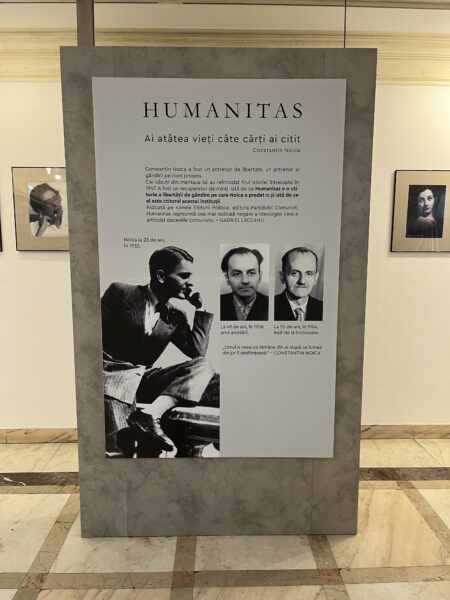
In 1967, two years after completing my studies at this faculty, I met Constantin Noica. A friend and contemporary of Eugène Ionesco, Mircea Eliade and Emil Cioran, he had chosen, unlike them, to remain in his homeland after the war. Had he, too, settled in France, his name would have needed no further explanation, any more than theirs did. But he had stayed. And when the post-war tragedy descended upon Romania, he was forty years old. The seven or eight books he had written, together with the numerous translations of Aristotle, Saint Augustine, Descartes, Kant and Hegel that he had produced up to that point, were consigned to the secret collections of the libraries. After ten years of compulsory residence in a small provincial town and six years in prison, out of a twenty-five-year sentence to which he had been condemned – for attempting to send to France, for publication, an interpretation of Hegel’s Phenomenology of Spirit – his memory as a man of culture had been erased from the minds of the younger generations.
He briefly re-emerged into public cultural life shortly after his release in 1964, during the short-lived period of openness that marked the early years of Ceaușescu’s rule. When I met him in 1967, he was working as a researcher at the Centre for Logic in Bucharest and was seeking out what he called “young initiates” in order to become, in the words he had used upon leaving prison, a “cultural mentor”.
Together with two or three friends, I happened, almost by chance, to find myself among the circle he had brought together for this purpose. Thus began a spiritual adventure that would shape my destiny once and for all. We met at his home every week, and during the first year he took us through Hegel’s Phenomenology of Spirit, paragraph by paragraph, bringing to this, the most difficult text in all philosophy, a degree of originality that I have encountered in no other commentator. From the outset, he introduced us to the tools of philosophy and made the continuation of our meetings conditional upon our learning Ancient Greek, Latin and German.
The following year, on his advice, I enrolled in a second faculty, the Faculty of Classical Languages at the University of Bucharest, where I graduated five years later, in 1973. As early as my second year, I embarked on a translation of a fifth-century commentator on Aristotle, David the Armenian. His Introduction to Philosophy was published a few years later by the Publishing House of the Academy.
He asked a friend who had an interest in Eastern philosophy to study Sanskrit, and drew up for each of us a multi-year programme of philosophical reading, encompassing the major works of ten to twelve of the great figures of European philosophy. A few years later, we began organising private seminars devoted to Plato’s dialogues, with the original Greek texts before us. Then, when Noica launched his project in 1974 to publish the complete works of Plato in Romanian, we were all part of the team of translators and commentators, alongside the university’s professors of Ancient Greek.
In the studies and books that we began to publish – Andrei Pleșu’s Pitoresc și melancolie (The Picturesque and Melancholy), published in 1977 (Pleșu would later become Minister of Culture after the fall of Ceaușescu); Sorin Vieru’s works on the philosophy of logic and his essays; my own book, published in 1975, The Tragic: A Phenomenology of Limits and Transcendence; and Victor Stoichiță’s studies in iconology and the philosophy of art (he would later become a professor at the University of Fribourg in Switzerland) – there remained no trace whatsoever of the standardised thinking characteristic of Stalinist cultures. We had learned to think and write for ourselves, and were becoming increasingly aware that we represented the generation called upon to take up the torch of pre-war Romanian culture – in other words, to re-establish the connection with what had existed before the catastrophe.
Meanwhile, the books Constantin Noica had written during his years of compulsory residence, in conditions of almost unimaginable deprivation and without the slightest hope that they would ever be published, as well as those he had written after his release, began to appear, year after year. They brought with them the voice of an original mind and, through the unique quality of their style, captivated an entire generation discovering culture in the 1970s.
From the standpoint of cultural policy, our good fortune lay in the fact that Ceaușescu, in his megalomaniacal delusion, sought to replace Marx’s thought with his own. As a result, the ground hitherto occupied by philosophy was left relatively open for a considerable period. The relaxation of the Marxist straitjacket made it possible to publish original and unorthodox works, as well as an impressive number of translations of works by the pre-Socratics, Plato, Plotinus, Hume, Berkeley, Kant, Schelling, Freud, Frege, Carnap and Heidegger.
In 1975, shortly after his retirement, Constantin Noica rented a miserable eight-square-metre room in a mountain chalet at Păltiniș, a mountain resort near Sibiu, situated at an altitude of 1,400 metres and 330 kilometres from Bucharest, and settled there. That was when the most extraordinary chapter of our adventure began.
Whenever we had a few days of freedom, three or four of his disciples would hasten to Păltiniș. In the absolute solitude of the mountains, “four thousand feet above humanity”, as Noica liked to say, we would walk for hours. Then, in the evening, in his little wood-heated room, would unfold the most fascinating discussions in which I have ever taken part, the most passionate exchanges of ideas, and the most subtle, lively and affectionate observations on our own writings, which we submitted to one another’s scrutiny.
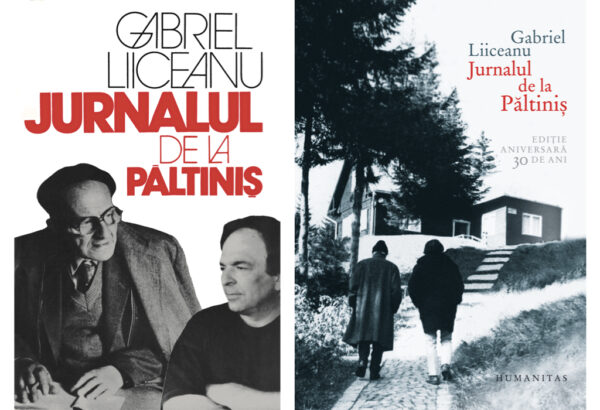
These several dozen encounters took place over a period of five years, between 1977 and 1981, and I had made a habit of recording each of them at the end of the day. The pages thus assembled, which I entrusted to a publishing house shortly before leaving for Germany in 1982, where I was to apply for a Humboldt scholarship, in the faint hope that they might one day be published, amounted to some 350 pages. They recounted a process of intellectual maturation, a subtle pedagogical undertaking that began with a discipline freely accepted by both parties and culminated in an act of liberating revolt.
The book was entitled The Păltiniș Diary, with the subtitle A Paideutic Model in Humanist Culture. It was published in 1983 and became a landmark for an entire generation of young humanist intellectuals.
In a world where material and moral deprivation were almost total, where Romania’s isolation had begun to deepen – people increasingly spoke of its “Albanisation” – where television broadcasts lasted a mere two hours a day, half of which were devoted to the presidential family; where the press, theatre and cinema were subjected to the most relentless censorship; where life had lost every ideal and every sense of purpose, the Diary suddenly opened a window onto a universe as impenetrable as a blind monad.
Any hell becomes bearable once the paradise of culture is within reach. And the pages of the Diary proved that this paradise was possible, even in Ceaușescu’s Romania. They described the path leading to it as a journey towards emancipation and inner freedom. This nightmarish world suddenly became bearable: with a little Greek, a little German, and the contemplative reading of the great books of humanity.
But culture here was no mere academic exercise, nor was the aim simply to “become educated”. It represented a process of formation and profound transformation: it was Bildung, paideia, the birth of the self, of individuality and of autonomous thought, wresting itself free from a world of enforced and systematically engineered intellectual stupefaction. What the schools and universities had failed to accomplish, one man had achieved single-handedly.
Alongside Noica’s own work, or beyond it, the Păltiniș Diary created a legend. (This is not to suggest that this experience exhausts the entire horizon of Romanian culture, which, through its various forms of expression – literature, painting, music and cinema – mobilised every means at its disposal to survive, and always succeeded in doing so.)
And this legend began to take on a life of its own, gradually permeating reality. Every year, thousands of young people from every corner of the country made their way to Păltiniș, seeking, with the help of this “trainer of minds”, a way of giving meaning to their lives. His room –
which he had meanwhile exchanged for one of more conventional dimensions – would sometimes accommodate as many as ten people at a time, and no one ever left without having been profoundly affected by the encounter.
In any event, they all discovered that there is such a thing as being “unclean” in the realm of the mind, just as there is in the realm of the body, and that, for a human being, culture is not an occasional adornment but the very element in which one exists, just as water is for fish and air for birds.
Noica possessed such powers of persuasion when championing the cause of the mind and of culture that he could even win over senior Party officials responsible for cultural affairs and enlist them in his endeavours. It was in this way, for example, that he succeeded in bringing the project of publishing Plato’s complete works into being.
In the final years of his life – he died in December 1987 – Constantin Noica had become a veritable national institution, albeit one kept under close surveillance by the Securitate. He left behind several dozen disciples whom he had personally formed, and several thousand others whom he had shaped through the intellectual spirit of his books. The “Păltiniș School”, which emerged from the world inhabited by the figures in the Păltiniș Diary, has since become an established concept in the history of contemporary Romanian culture.
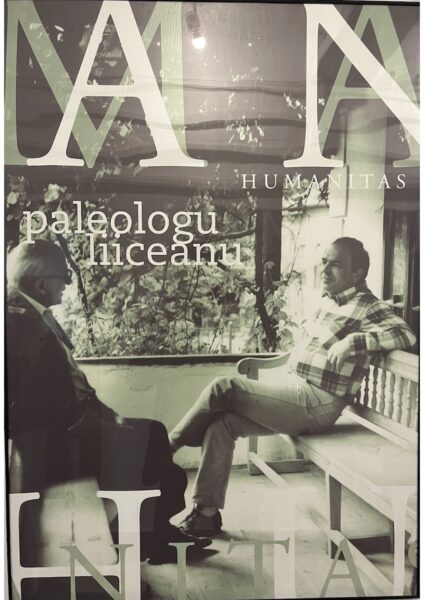
The Păltiniș Diary, which described the scenario of this paradoxical liberation, comparable to the symbolism of the Symplegades evoked by Mircea Eliade – the escape from hermetically sealed spaces – was printed in an edition of eight thousand copies. Photocopies subsequently made and sold on the black market commanded, shortly after the book’s publication, a price of 200 lei, compared with its official retail price of 9 lei. (By way of anecdote, shortly after its publication, during the winter of 1983, when butter was a scarce commodity in Romania, one could obtain four packets of butter in exchange for a copy of the Diary.)
Of course, what matters here is neither the book as such nor its author, but rather the experience it recounted, an experience which, by virtue of its unprecedented nature, aroused such intense interest.
Constantin Noica left behind an impressive body of work comprising more than ten thousand pages – its complete publication is being undertaken by Humanitas Publishing House – and was undoubtedly the last great metaphysician of the century, as well as the last author of a Treatise on Ontology. He also left behind another legacy, no less significant: that of a man who saved minds in times of distress, an achievement whose effects can neither be measured nor even fully imagined.
Romania experienced neither a movement comparable to Charter 77 in Czechoslovakia nor one akin to Solidarity in Poland. Whether this was due to the effectiveness of the Romanian Securitate, or perhaps reflected our own weakness, is open to question. But the phenomenon and the experience I have just described seem to have been unique among the countries of Eastern Europe. (It is possible that something somewhat similar emerged in Czechoslovakia around the figure of the philosopher Jan Patočka.)
This model undoubtedly has both its greatness and its limitations. On the one hand, under conditions of spiritual confinement and isolation unparalleled in any other country of Eastern Europe, it prevented the systematic and wholesale liquidation of humanist culture, always drawing upon the conviction that the survival of a country threatened by the course of history could be secured only in the realm of the mind.
On the other hand, however, it was precisely in the name of this conviction that the model turned its back on real history, on the history of events, regarding it as mere “meteorology” – now rain, now sunshine, now storm – and therefore unworthy of any deeper commitment. For Noica, dialogue with politicians, with representatives of the authorities – those “lackeys of history” – appeared utterly meaningless. He therefore regarded dissidents as victims of an illusion, trapped in a confrontation devoid of any essential significance.
Thus, the very being of a civilisation was defended, but the political establishment was in no way threatened in the immediate term. This model produced professionals, even virtuosos, of culture, but inhibited any impulse towards direct political dissent. No Vaclav Havel emerged from Noica’s school, and none of his disciples became the Romanian equivalent of a counsellor to Lech Wałęsa. Noica believed only in the Last Judgement of culture and in the credentials one might present before it. He was interested solely in “racehorses”, not in the “circus horses” performing in the arena of history.
Yet, following the events of December 1989, most Romanian humanist intellectuals left their studies and went to meet History. As early as 31 December, all the members of the Păltiniș School joined the most distinguished figures of Romanian dissent as founding members of the Group for Social Dialogue. Established as a forum for reflection on and criticism of society, the Group was entrusted with the task of promoting the values of a genuine civil society and of immediately drawing attention to any abuses or deviations of power, whoever might be called upon to exercise it.
The journal 22, a weekly publication of the Group for Social Dialogue, became, barely two or three months after its launch, the country’s most prestigious democratic publication, distinguished by impeccable intellectual standards. It sought to foster dialogue between the various strata of society, between those strata and the political authorities, and between the majority and the minorities.
The long road out of the ignorance fostered over decades by isolation, lies and sophistry cannot be travelled in a single night, or even in a matter of months. Perhaps it is this failure to grasp the true nature of the situation that Romanian intellectuals can be faulted for today. Having spent years enclosed in the world of their books, they failed to appreciate the depth of the damage left behind by the diseases of the collective mind. What they are demonstrating today is the impotence of direct speech, the tragedy of the physician slain by his own patients.
In our minds, the idea that history unfolds above our heads is once again lying in wait. And so the question resurfaces, ominously: what is to be done?
Most of us, swept up in the whirlwind of events or having become cultural functionaries, have found no time to read a book for the past eight months. Yet this abdication of our cultural responsibilities may be every bit as culpable as turning a blind eye and lapsing once more into silence.
Perhaps the road leading to the ailing souls of men is as long as the illness itself and the process through which it took hold. Perhaps the works of culture and the power of the spoken word can no longer reach them. Perhaps it would be more important to concentrate our efforts on the younger generation and its extraordinary intellectual gifts – for these, ultimately, constitute the most precious asset of the Romanian people. Perhaps it would be more worthwhile to publish books, to return to the libraries and to the students.
Perhaps scholarships abroad are more important, as are the secondary schools and institutes you will establish – let us hope that you will indeed be able to establish them – in our country. Perhaps it matters more to bring professors here to teach in our schools. Perhaps this gathering, in which I place such great hopes, is itself of greater importance. The truth is that, after so many centuries of history, we still do not know how the mind makes its way into the world.
And perhaps, for our part, in pursuit of a salvation whose very possibility we are not yet capable of imagining, we should return to the Păltiniș model, but to a Păltiniș now open to History, mindful of the day when we shall be called to appear before the Last Judgement of universal culture. Let us hope that the God of Culture will summon us alongside the other nations of Europe.
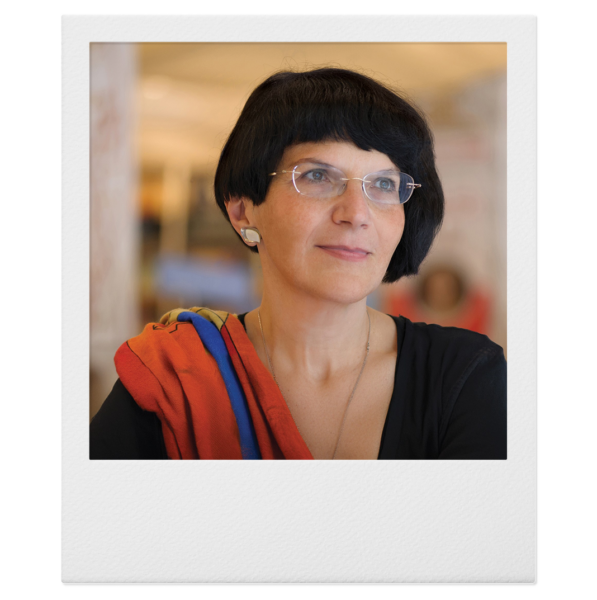
Photo © Radu Sandovici Fundatia Humanitas Aqua Forte
What Does It Mean to Be European in the Post-War East?” was written in 1990, the year Humanitas Publishing House was founded, and delivered by the author at the second session of the European College for Cultural Cooperation, held in Luxembourg from 4 to 7 September 1990. It was subsequently included in the appendices to the commemorative edition of The Păltiniș Diary (2013), published thirty years after the book’s original publication.