

When I visited Mircea Iorgulescu in Paris, at the beginning of 1990, in his Radio France Internationale office, the critic shocked me by saying: “You have to be aware that you’re entering a new world and everything you’ve written and published until now is of no value anymore. Everything written during communism gets left behind in communism and dies with it.” Was that really how it was? Maybe for the books affected by communism, but during the 42-year-long dictatorship, books were also written that had nothing to do with it and its ideology. From The Well-Tempered Wise Guy to The Millionaire’s Book, from Dimov to Nichita Stănescu to Mircea Ivănescu, from The Handbook of Events to Field Raspberries and so many others, plenty of books had no problem crossing over from one world to the other, because they weren’t too concerned with either one or the other, but with beauty, which is universal.
In the previous decade, I had published three volumes of poetry and one of prose, and I wasn’t ashamed of a single page. They had been published, after a fair share of fights with Censorship, by the editors at Cartea Românească, with whom I was friends at the time: Mircea Ciobanu and Florin Mugur, who were themselves excellent writers. The directors of the publishing house then were also big names in the literary world: Marin Preda, followed by George Bălăiță. They all protected us, the young writers of the eighties generation, most of whom first appeared at Cartea Românească. Like the literary critics of the day; Manolescu, Crohmălniceanu, Simion, Negrici, and Ion Pop; they saw in us the hope of change in an increasingly outmoded literary world. “A revolution is no reason for me to change my style,” I told myself then, with the pride of youth.
After 1989, I had a few literary priorities, urgent ones, in fact. The first was to publish The Levant, the poem of mine no one would publish before. I had finished it in the middle of the previous year, when I sincerely believed it would remain forever in the shoebox where I kept it. In the first days of January 1990, I met with Florin Mugur and gave him the typescript (the original, the only one I had, and which I still have even now), and the book appeared, I think, in the spring.
Things were much harder with Nostalgia.
This book, which contained the first prose texts I had ever written, in the order I wrote them, had appeared in 1989, though I had finished it in 1985. It had languished for four years at Censorship. It came out from there with about 60 pages cut and a different title. I felt an urgent need for it to be published in its entirety. But in the meantime Cartea Românească had collapsed, like other presses from the old regime, and for two years I couldn’t find an editor, no matter how hard I tried, though the volume had already been translated, and had experienced a degree of success, in France.
I approached bizarre presses, with baroque names, monsters of the transition period—one was named Dragon LLC—as well as presses specializing in mainstream literature, such as Nemira. They all rejected my book, telling me it was unmarketable. When I had already lost all hope and resigned myself to being without an editor for many years, I received a letter.
It was 1992, I was living in the Colentina neighborhood, on the eighth floor of a building I still see in my nightmares, I didn’t have a phone and my only link to the outside world was the mailbox. I’d go down even five times a day to see if someone had written me. No one, of course, ever wrote me; in the box I’d find only receipts for the electrical and heating bills. That’s why I was very surprised one morning to receive a letter in a long, elegant envelope, with the emblem of the recently founded press Humanitas. I opened it while walking up the stairs and read it in the murky light between floors. In ceremonious words, Gabriel Liiceanu, whom I had never met before then, asked me “to do him the honor” of publishing The Dream, as Nostalgia was called in its mutilated version, at the press he was heading, and he invited me to visit him the following week.
The weekend passed slowly, and Monday I was in his office at the Press House. To me, accustomed as I was to the sordid apartments I had lived in all my life, that sober space filled with books seemed like one of the hexagonal rooms of the library of Babel. It was intimidating and a bit awkward, I didn’t really know what I was doing there. I don’t remember that meeting then, I only know that the director of the press said to me: “We’d like you to publish everything else you’ll write with us from now on: if we’re going to be Gallimard, you, sir, will be Camus!” I didn’t dare smile, except on the inside: the author of The Plague wasn’t at all one of my favorites. But I understood the meaning of the phrase. Later, Liiceanu would often recall our first meeting: “You looked like a teenager who might cut his own hair, whose clothes fit all wrong, but you talked like a book: in fifteen minutes you told me not only what books you’d write over the next ten years, but also their dates of publication and, unbelievably, this entire crazy plan, which you laid out for me then in a calm, even voice, standing in front of me in my office, was executed step by step: you gave me each book exactly the year and month you had planned then. I was looking at you and thinking you were either a bit… off the wall, or a prophet, or who the hell knew what was going on with you…” I couldn’t swear that’s what happened, but in the following years I felt the director of the press believed and trusted me. A few times, at different book launches over the years, I thanked the press and Gabriel Liiceanu saying something to this effect: “I think that if one day I were to bring the press a manuscript of 500 completely blank pages, they’d immediately publish it, without a single objection.” This blank check Humanitas gave me for 26 years, to do all the crazy stuff I wanted, was one of the great opportunities of my life. Every promising young writer should get this opportunity. For more than a quarter of a century, I can’t remember there ever having been a cloud between us, not a single suspicion, not even any negotiation: I always accepted the conditions they proposed to me, and never gave them any conditions beyond publishing my books exactly as I turned them in, every last comma, pereat mundus.
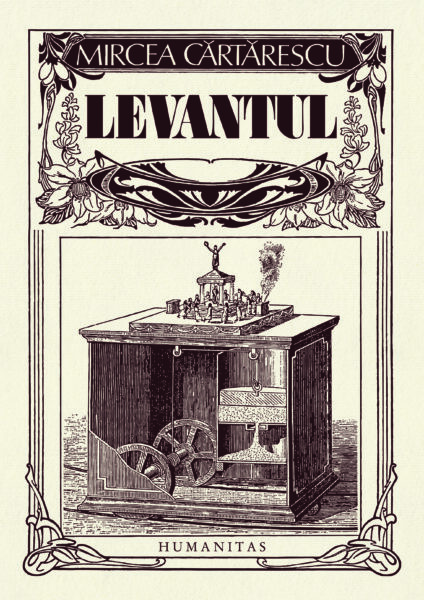
Over this quarter century, I’ve accumulated situations and stories that today I remember better than the books, clothed in such different graphic designs, released from the press’s literary factory. Each book, in fact, had its own story, whose memory, for me, surpassed that of the book itself. The Dream from 1989 had a hypnotic cover, Tarkovskian blue, created by Dan Stanciu, who had also illustrated The Levant for me in 1990. But for Nostalgia, the press had an in-house graphic designer, who told me she needed a “strong, unforgettable” image for the cover and asked me to search for something that fit. I didn’t even have a computer back then, and in any case the internet was still a vague notion. “Search” meant something different than it does today. So I looked through the few magazines that would come to be called glossy I had at home: foreign fashion magazines. In one of them, I found the strange androgynous face of some model, which I cut out myself from an ad for who knows what purse or other accessory, and brought to the graphic designer. “This works,” she said, “I like it, it even looks a bit like you…” (my face was much thinner back then). And that woman-man, hair slicked against the temples and wearing a tie, appeared on the cover of the first edition of Nostalgia, images so vintage and decadent that, even now, when I pull out my last copy from my bookshelf, I get an undefinably bad feeling and one of… okay, nostalgia. The book’s pages were ash grey, the colors on the cover would come off on your fingers and smear the board. Of all my books, it was the one that appeared under the worst conditions—during the transition period and when the Mineriads happened. After the book was published, I took a bottle of Zarea “champagne” to the same office where I had my first discussion with Gabriel Liiceanu, but he shoved it back into my bag and said: “What do you think we’re doing here? That it’s like in the old regime? Never come here again with absolutely anything other than manuscripts!” I felt very embarrassed, I had been taught wrong (at Cartea Românească I used to take a bottle or two of vodka even to the printer’s), but I’ve learned my lessons since then.
If Nostalgia’s success exceeded expectations for the press both in terms of sales and visibility, catastrophe took on the form of Travesti for me. “It’s a step back and payback,” the book’s editor told me without mincing words, and Mr. Liiceanu himself, seeing the manuscript of only ninety pages, with passages alternately handwritten and typewritten, looked at me a bit askance: this is what you bring us after Nostalgia? And then it was one unpleasant thing after another. I don’t know why, but it was rumored that the book was a bit queer. I had to reject a cover in which two men looked greedily into each other’s eyes, with a giant rose between them. I suggested an illustration by Giger, and was told there was enough horror inside the book, the cover didn’t need it as well! I should’ve appreciated their honesty, but I didn’t appreciate it. I was crushed: had I written a book that terrible? After Travesti was published with a somewhat more decent cover, but still along the same lines, I didn’t get a review for three months. “Why in God’s name did you write this book?” even C. T. Popescu quietly asked me, devastated, when I happened to run into him at a book launch. He had been a great admirer of my first book of prose, about which he had written glowingly. The experience of Travesti was very, very bitter for me. But so necessary!
This short novel has always been the black sheep of my writing, misunderstood and not read closely. The first review, after a long period of silence, was entitled “Discrete confessions.” The first Italian translation was dubbed “Una piccola Bibbia gay.” Excerpts from the novel appeared without my knowledge in the anthology of gay literature Bloody Europe and I also received offers from Mirinda, a movie production company specializing in the subject. I sometimes thought, with a smile, that maybe I would’ve had an interesting literary future if I had played along. But… well, that’s not how it was.
I was so discouraged by the reception (or, better put, the rejection) of this short novel, that I almost hung up my gloves forever. The descent continued with The Love, a volume of poetry that was an extension of the eighties generation style poems I published before 1989, which didn’t really create any waves. The book launch was also a failure; it was held in the hall of the Faculty of History, where a sophisticated installation made of, if I remember correctly, green and pink bicycles refused to work, and some actors that were supposed to recite my poems forgot to come. But a few words were said by Emil Constantinescu himself, back when he was a simple private citizen; he politely recited a text that I had written but which he seemed to think it up himself on the spot, lost in thought. Thus—another catastrophe! My situation as a Humanitas author had probably become rather precarious.
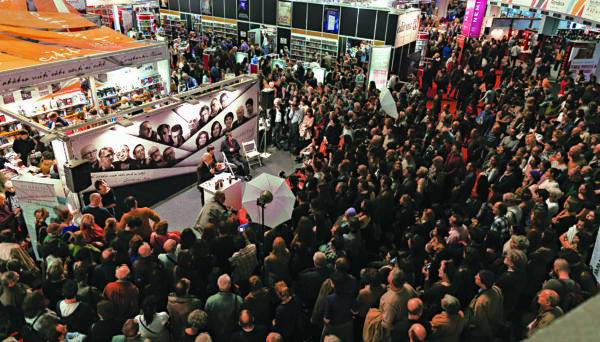
Strange times, strange people. Inflation had struck, the press itself was shaky and taking on water like a boat in a storm. How could you, an author on the decline with each new book, be demanding, when everything around was disintegrating? In 1993, after the failure of Travesti, I started working on something even more extravagant—just because, to defy my destiny—which I had named, ten years before starting to write it, Blinding. When I finished the first volume, written over a three year period, I took it to the press feeling like I was climbing the steps of a scaffold. I expected this time to simply be rejected right from the get go. Especially since I had the same editor who had told me Travesti was “a step back, etc. etc.” I waited for the verdict for about a week like someone condemned to death. Finally, I went over to the press, met with Oana Bârna, and felt the weight of Mount Everest taken off my shoulders when Oana said to me thrilled: “Blinding is Nostalgia squared! A fantastic and fantastical novel!” I felt then that the chart line of my relationship with Humanitas, which had reached its lowest point, had started climbing again, and would continue climbing for many years to come. The book appeared in 1996 and received a lavish book launch at the Writers’ Union to a packed hall. I often think I was more famous then than today, after so many decades of literature. Or maybe literature itself meant more then. Ulici, Manolescu, and Liiceanu spoke, followed by me, a shaggy kid with the moustache of a palicar soldier (I still have a photo from the launch). I said only a few words, first thanking my parents, who, for the first and only time, came to an event like this: “I couldn’t have written this book were it not for my parents.” “I believe you,” Manolescu immediately said with a smile, and the audience laughed, to my embarrassment because that wasn’t what I meant. Ioana, my future wife, was also there, though I knew her only in passing then. I hadn’t experienced this amount of success since The Levant. Even among the writers, a competitive and, as we know from Horace, irritable tribe, my status grew then, because Blinding confirmed my desire to reach new heights in literature. No, I hadn’t retreated behind the walls of Nostalgia, I was trying to write something even better.
Fast-forward, skipping over the episode surrounding Why We Love Women from 2004, already too well-known for me to say anything new about it. I think it’s worth only the reminder that my poor book of short stories was initially, inoffensively, entitled The Paper Devil, and that the title under which it appeared (in record time: only ten days after I turned in the manuscript) was given by Liiceanu: “What does The Paper Devil mean? Call it Why We Love Women, and, you’ll see, you’ll sell four times as many books,” he told me. In reality, forty times as many books sold. Even now I can’t believe this little book sold 200,000 copies, not counting the pirated ones. A few fellow scribes insinuated, actually, flat out said, that I was taking after Coelho, writing facile literature for glossy magazines. In fact, the short stories, most of which were Salingeresque, were and remain simple works of literature, that can now be read with more serenity.
It’s time for another Gabriel to come onto the scene. He was born in 2003 and from the beginning he was rather strange, much more original and unconventional than I ever was. No, Mr. Liiceanu wasn’t his godfather, as is rumored, nor were we thinking of him when we named our little one. I remember the night so clearly when Ioana, who was pregnant and knew it was a boy, stayed up with me until dawn going through hundreds of names, including some of the most outlandish ones (Artaxerxes, Epaminonda, Archirie, Anadan…), until, after we were crying with laughter, she said: “I’m guessing you wouldn’t like Gabriel,” to which I answered, “Why wouldn’t I like it?” And Gabriel it was, to his satisfaction and ours today.
Our Gabriel came onstage in the same sumptuous office which we spoke of earlier, full of furniture, paintings, and books, with a padded door, the director of the press’s retreat. Since I couldn’t leave him at home with anyone, I took Gabriel with me one day to Humanitas. He was about three years old, and before we went to the office, he had been instructed to be good. Mr. Liiceanu received us even more ceremoniously than before, he spoke very kindly to Gabriel, who saw in this the sign of a natural democracy: from now on, he was our equal, which gave him energy and momentum. When the director of the press left the office for a few minutes, he thought he’d show us what he could do.
To this day, whenever Gabriel is mentioned, Mr. Liiceanu always evokes the scene he witnessed, in disbelief, when he came back into the office: my boy was standing on his head, with his legs in the air, on the director’s armchair, a massive and sumptuous leather armchair! I had turned around for just a few seconds to look at a painting. “Gabriel!” I yelled, at which the child collapsed with his legs onto the desk covered in contracts, books, and documents, making a complete mess. A few years prior at the Neptune seaside resort, at the same age, my daughter Ionuța was stepping on the shoes of Andrei Pleșu, who was the Minister of Culture at the time. What a strange competition between them…
And, because we’ve come to the subject of childhood and childishness, I’ll tell you about the bizarre way my only children’s book, The Encyclopedia of Dragons, came to be. It was in no way inspired by my fatherly heart. It’s true I told both Ionuța and Gabriel hundreds of stories, invented on the spot and forgotten the next day. If I had at least recorded them, I could’ve made a certain name for myself as a children’s author. Here’s how The Encyclopedia of Dragons came about: one day, I was called to the now famous office, and Mr. Liiceanu, more jovially than ever, said he thought of something for me. “Look, there’s an EU project for children’s books which asks authors to write about monsters from local folklore, specific to each nation: dragons, trolls, ogres, Baba Yaga… Are you tempted? You could write a really beautiful book…” “Yes, I definitely have some things to say about Baba Yaga,” I said amused, because I thought Liiceanu was joking. “No, let’s talk about this. And here’s a possible source of inspiration, these superb art books, I borrowed them from…” and he said I forget which important art library. There were three or four huge, fantastical art books, with extraordinary illustrations, for children. “They cost an arm and a leg,” he added, and continued showing me the illustrations for fifteen minutes. “Mr. Liiceanu,” I said, “they are very beautiful, but I don’t write children’s books.” “But why not?” with that naivete he sometimes had, surprising the person he was talking to. “Because… I’m not a children’s writer. I really don’t want to get involved in something like this.” “Come on, please…” “No, no way. I barely have time for my own writing.” “Not even if it’s me asking you…?” “No, please.. I don’t write on demand…” We haggled like that for awhile, after which Gabriel (I didn’t yet call him by his first name) said: “Fine, as you wish. I’ll let you think about it for a few days. Here, take these books home with you and look over them a bit more, maybe an idea will come to you. We’ll meet again next Monday.” I left the office annoyed, carrying the huge books in a canvas tote. What was he thinking? What did I have to do with children’s literature?
At home, I didn’t even look at the books, which, as I’m remembering now as I write, were about dinosaurs, because tyrannosauruses and velociraptors were all the rage, thanks to Jurassic Park. Each had a small sticker on the back cover with the price in dollars, a three digit number. Expensive bunches of paper, no kidding. On Monday, I hauled them back to the press, taking them for a tram ride because I didn’t have a car yet. I was firmly determined to refuse the director’s offer. It took so long to get from my Colentina neighborhood to the Press House that I always brought a book to read. Lost in the book, I didn’t notice I’d reached my stop and got out of the tram at the last second, almost caught in the doors that were noisily shutting. I could see the Press House in the distance, at the end of rows full of parked cars. I headed toward its Lomonosov-style outline slowly, repeating in my head my firm refusal to write for children, when I suddenly froze. My eyes clouded over: I no longer had the tote of books! I had forgotten it in the tram, on the chair, in my rush to get off!
The weather was horrible that day and drizzling; nature mirrored the poet’s feelings. I stood on the sidewalk in the rain, frozen, bare-headed and soaked to the bone, and I couldn’t believe it. What could I do? I knew full well that the darn books had gone down the drain.
But just to feel like I had done something, I went back to the stop, to the ticket kiosk, and asked the ticket seller to get ahold of the tram driver somehow. That wasn’t possible. There were dozens of trams on that route. The woman at the kiosk didn’t know if a dispatcher or a lost and found existed. I waited for over an hour to check all the trams stopping there; I asked the ticket collectors and the riders: no one knew anything. I thought I recognized the tram I had taken and rode it to the next stop. But where I had sat, of course, there was no tote. A few years later, I would forget the bag carrying my brand new laptop on a bus at night in Berlin. The next day, first thing in the morning, it was waiting for me at the lost and found. But Bucharest wasn’t Berlin: who knows what happy children, that very night, leafed through the pages of my books, their eyes growing big at species after species of dinosaurs…
I arrived at the press late, dripping wet, and in despair. I went into Liiceanu’s office without the books and without the nerve to say no to him. When I told him I lost the books, I think I saw a face muscle twitch, but he didn’t blame me: shit happens. I have no idea how he dealt with the library he had borrowed them from, but I know that when he asked if I was going to write “the book about dragons” or not, I answered with a yes, a grateful one even. Habent sua fata libelli. An exemplary case, some might say, of serendipity.
It didn’t take me very long after that to write the book. I don’t remember anymore, but Ioana tells me she could hear me laughing like crazy in my office by myself while I invented those species of dragons and put them to work. I finished quickly, in three entertaining months of complete self-abandonment, after which my friend, the astounding artist Tudor Banuș, took it and illustrated it with dragons wearing cell phones, machine guns, and other modern gadgets. He even included my portrait in the form of a wiry dragon wearing a German World War II helmet.
I don’t remember the moment, after much hesitation and several returns to more formal addresses, when I started calling Gabriel Liiceanu by his first name, but soon after that we became good friends. We started seeing each other in different groups to enjoy Bucharest’s terraces and warm evenings over a beer. A rule we always respected was never to discuss publishing matters during these types of occasions. They would have to wait until the famous office at the Press House. Each time, Gabriel was visibly delighted by my relative knowledge of electronic gadgets and other new technologies, as I was by his explosive, irresistible sense of humor, his impressions of different people, the shows he put on which I witnessed countless times, but are so hard to put down on paper! In Timișoara, for example, a few months ago, you should’ve seen Gabriel Liiceanu going into a shoe store with his usual imposing bearing, all eyes turning toward him. After he walked a bit among the displays, he stopped a short, brunette salesgirl and asked her gently, timidly, with disarming candor: “Miss, do you happen to have any escadrilles?” “Pardon?” the girl said. “Yes, you know canvas escadrilles, they’re very comfortable in the summer… I’ve been looking for a pair for awhile and I don’t think they make them anymore, I can’t find them anywhere… Believe me, nothing compares to a good pair of escadrilles!” I don’t know how the poor girl answered, because I ducked behind a stall to laugh unrestrained. God only knows how the playwright Caragiale told jokes, they say his verbal genius surpassed what he wrote on the page. Liiceanu, too, has to be seen and heard live in his good moments, what I’m relating here isn’t the same thing. How many of his short, improvised comedies I’ve witnessed! In a group of other writers, Denisa Comănescu was talking a bit more about Nae Prelipceanu, saying something about what they did “at home,” to which Gabriel, as if awoken from a deep sleep, with consternation that seemed completely genuine, said to her in the same tone of absolute good faith: “Wait, wait a second, Denisa… forgive me if I’ve misunderstood… You are… married to Nae Prelipceanu?” He’d known that for decades, of course, but you could’ve sworn he had just found out then.
I later published other books at Humanitas, always at war with the poor woman from graphic design, Angela Rotaru: every time she had to create a cover for me it took on the proportions of a tragedy. I’ve even asked her for up to twenty different versions, which I rejected one after another… I’ve always given her precise instructions like “I want something, but I don’t know what,” and still she doesn’t always guess what that is. Moreover, my excellent artistic taste is well-known at the press: I’m crazy about the color combination of purple and green… But in the end, it all works out, and, until the next cover, we both enjoy a bit of peace.
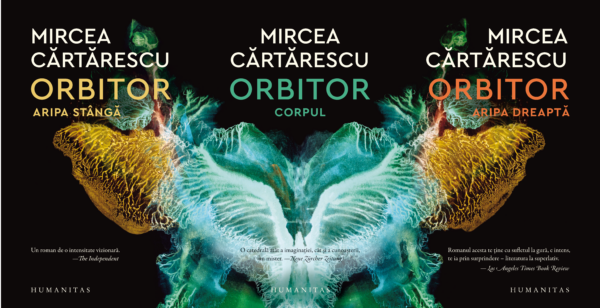
I expected Blinding volume III to be well-received, after all, it was the end of a far-reaching project that had kept me writing for fourteen years. But when it appeared in 2007, it triggered a wave of criticism, “the third wave” in my beautiful Romanian literary life (before, the first volume of my Journal had triggered irritation, and then, of course, Why We Love Women). I realized then that my literary friends wouldn’t allow me to classicize myself even when I was fifty, or sixty, or ninety: as soon as they’d see any glint of marble on my jacket or jeans, they’d crumble it with a zealousness that was, after all, very benign. In fact, they’ve made my skin so leathery for the last four decades that it’s tougher than marble. But I don’t give up either: the more vulnerable my walls are, the more fiercely I defend them: if anyone says anything bad about Travesti, Blinding volume III, or Melancolia, I get angry, and my anger comes out in a huge shrug. Because, like the Apostle Paul, “my strength is made perfect in weakness.” I love my books that have run risks, books that were different, easy for critics to pan. The ones that violated expectations. The ones that were “a step back and payback.” The ones critics silently encircle seven times, after which they all shout together, thinking maybe their walls will fall. I don’t know if the press loved these projects the way I love them, but they published them along with the others, and in the end that means so much.
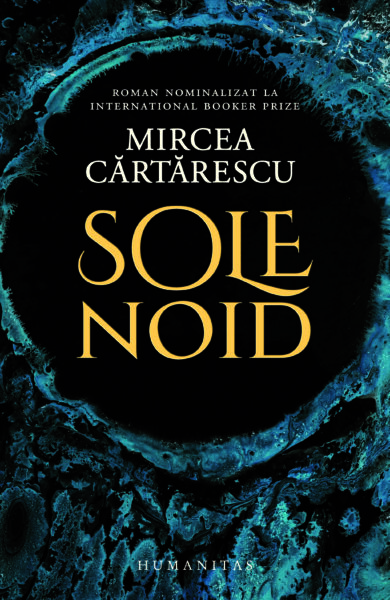
At long last, after another string of volumes that were less ambitious, but that I found restful and sometimes pretty amusing, I had the joy of giving the press a book I believed in wholeheartedly, as much as in The Levant or in Blinding: the novel Solenoid. I’ve never been more grateful for a gift. Afterward, I felt the chart line of my relationship with Humanitas had returned its highest point. Melancolia didn’t noticeably lower it (at least that’s what I hope), and that did me a world of good.
For the last 26 years, I’ve continued thinking about the phrase that began my journey as a Humanitas author: “If we’re going to be Gallimard, you, sir, will be Camus.” In addition to the immense generosity it shows to a young and relatively little-known author, I see a pioneering impulse in this phrase, the enthusiasm and idealism of a new world. Although the times, places, and circumstances are so different, I don’t think it’s at all too much to say that Humanitas, in the entire period after the Revolution, played a central cultural role in the life of the Romanian community, like the one Gallimard had and has in France. Instead, praise God, I’ve never become the local equivalent of Camus. Nor did I want to. All I’ve ever wanted was to be able to write, for better or worse, the books I’ve been given to write, remaining myself, with my strengths and weaknesses. But, so you know I, too, am tempted now and then by visions of greatness, sometimes I imagine a similar discussion to the first one I had with Gabriel in his office, transposed to the office of the director of a new press in South Ossetia, in a new era, in which the director says to a promising young author: “If we’re going to be Humanitas, you, sir, will be Cărtărescu.” Final gong.
Translated from Romanian by Monica Cure.
This text by Mircea Cărtărescu was published by Humanitas to mark the publishing house’s thirtieth anniversary.
For the last 26 years, I’ve continued thinking about the phrase that began my journey as a Humanitas author: “If we’re going to be Gallimard, you, sir, will be Camus.” In addition to the immense generosity it shows to a young and relatively little-known author, I see a pioneering impulse in this phrase, the enthusiasm and idealism of a new world. Although the times, places, and circumstances are so different, I don’t think it’s at all too much to say that Humanitas, in the entire period after the Revolution, played a central cultural role in the life of the Romanian community, like the one Gallimard had and has in France. Instead, praise God, I’ve never become the local equivalent of Camus. Nor did I want to. All I’ve ever wanted was to be able to write, for better or worse, the books I’ve been given to write, remaining myself, with my strengths and weaknesses. But, so you know I, too, am tempted now and then by visions of greatness, sometimes I imagine a similar discussion to the first one I had with Gabriel in his office, transposed to the office of the director of a new press in South Ossetia, in a new era, in which the director says to a promising young author: “If we’re going to be Humanitas, you, sir, will be Cărtărescu.” Final gong.
Translated from Romanian by Monica Cure.
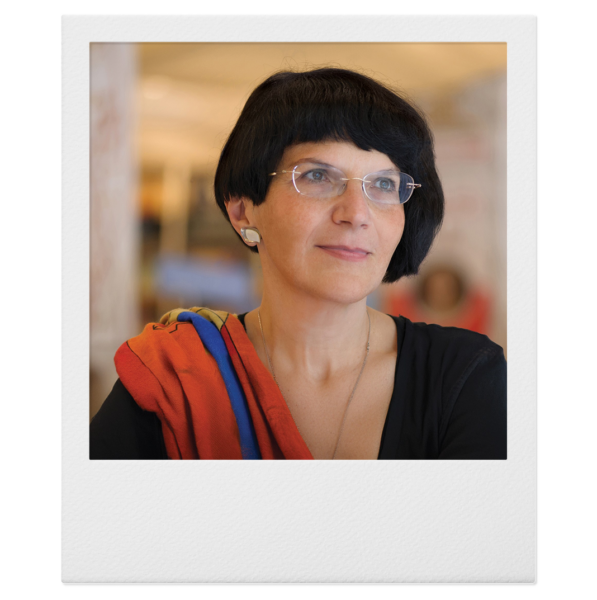
Photo © Cătălina Flămînzeanu