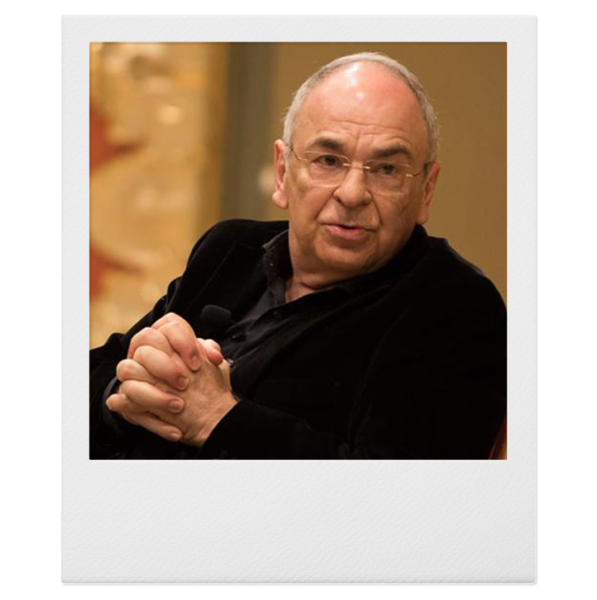
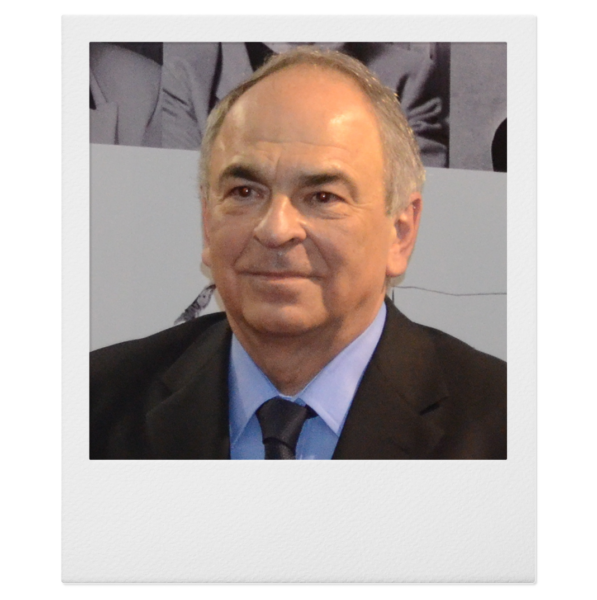
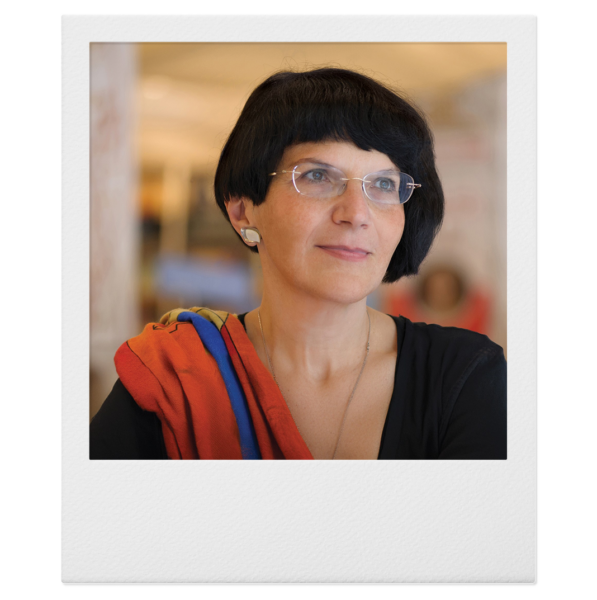

An Interview with Lidia Bodea
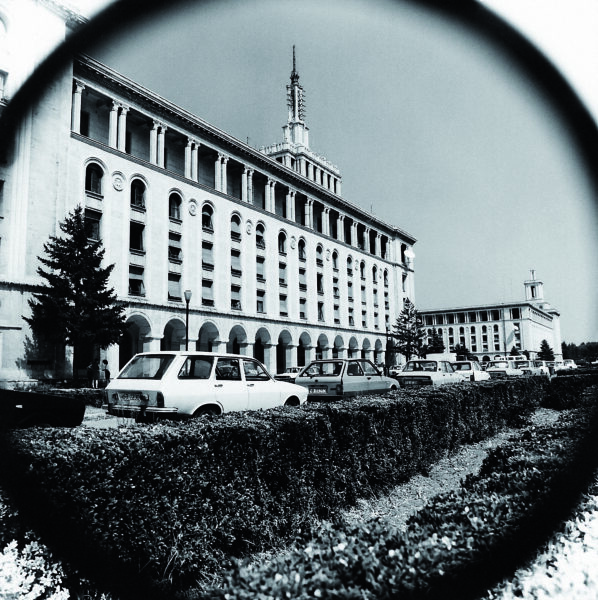
Gabriel Liiceanu, who founded Humanitas in 1990, had recommended that I meet her, citing her professional expertise, her experience within the publishing house and her excellent command of French. Lidia Bodea arranged to meet me at Humanitas’s headquarters. I knew nothing about the “Casa Presei Libere” – the “House of the Free Press” – as I approached it in a taxi I had taken upon arriving at Bucharest airport.
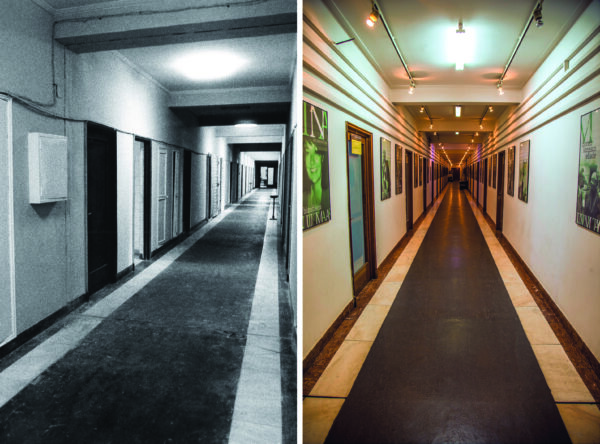
This enormous building, inaugurated in 1956, is a perfect architectural embodiment of monumental communist extravagance, much like the monumental Palace of Culture in the centre of Warsaw, presented by Stalin to his Polish “brothers”. It was given the name “House of the Free Press” after the fall of the Ceaușescu regime, in deliberate contrast to its function under the dictatorship: a centre for monitoring the national press and publishers, all brought together under one roof.
In the left wing of this spectacularly vast building – a smaller counterpart to the dictator’s final architectural folly, the Palace of Parliament, in the heart of the city – I discover the offices of Humanitas, the publishing house founded here, within the walls of Editura Politică, the publisher of Ceaușescu’s speeches and of communist orthodoxy. Intellectual freedom, the vision of a democratic, European Romania, in the very place where thought police once held sway. This is one of the extraordinary features – and there are many – of the history of a publishing house that is unique in the circumstances of its birth, in the values it has consistently championed, and in the place it holds today in a Romania beset by repeated political crises.
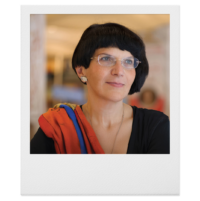
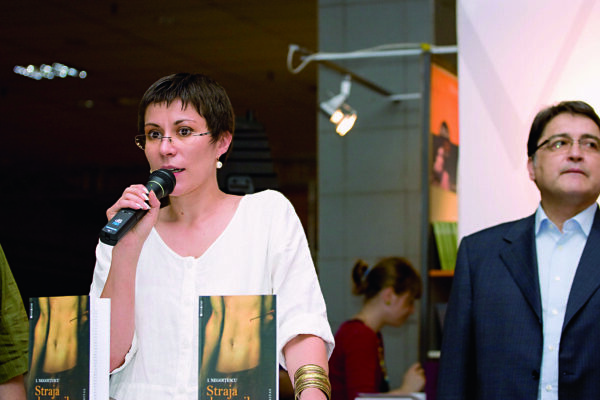
Lidia Bodea is waiting for me. Smiling, and passionate about the publishing house she knows better than anyone, she shows me around the offices, which open onto a long corridor lined with photographs of the house’s most distinguished authors.
Retracing my steps, I stop in front of a wall bearing a tribute that Gabriel Liiceanu wished to dedicate to his mentor, the philosopher Constantin Noica, the man to whom he devoted the pages of The Păltiniș Diary: A Tale of Spiritual and Philosophical Formation. There are photographs of Noica, taken before and after his imprisonment. And then there is this sentence, which captures the intellectual ambition of the publishing project, and which Lidia Bodea translates for me: Ai atâtea vieți câte cărți ai citit – “You have as many lives as you have read books.”
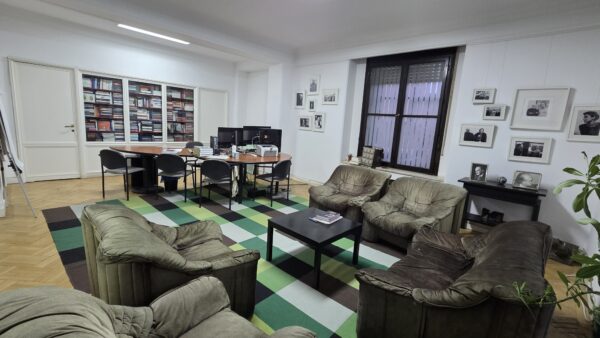
We sit down in her office, its walls lined with books. I begin by asking her to tell me about herself and about her personal history with this publishing house.
***
Since the beginning of February 2026, I have been working as an editorial adviser. This is the result of a decision I made to devote myself henceforth to my profession as an editor and, in doing so, to put my managerial responsibilities on hold, so to speak.
Looking back on my professional career, I have come to feel that I moved up the ladder too quickly.
At the age of twenty-five, I took on the responsibilities of editor-in-chief and editorial director at Polirom, the excellent publishing house based in Iași. Seven years later, I became managing director of Humanitas. The truth is that, throughout those years, I rarely had the time to do the actual work of an editor. That is why I decided that I wanted to read more manuscripts and sign fewer contracts… From now on, I would rather write reading reports for the editorial committee about authors I have discovered, authors whose work I admire and whose publication I want to champion. Romanian authors, of course, but not exclusively. There are so many outstanding books that have yet to find their way into the Romanian language. And I cannot help noticing that bookshops in my country are increasingly overwhelmed by books of little or no literary merit, to put it mildly. Faced with this tsunami of mediocrity, we must stand our ground by offering a different kind of book.
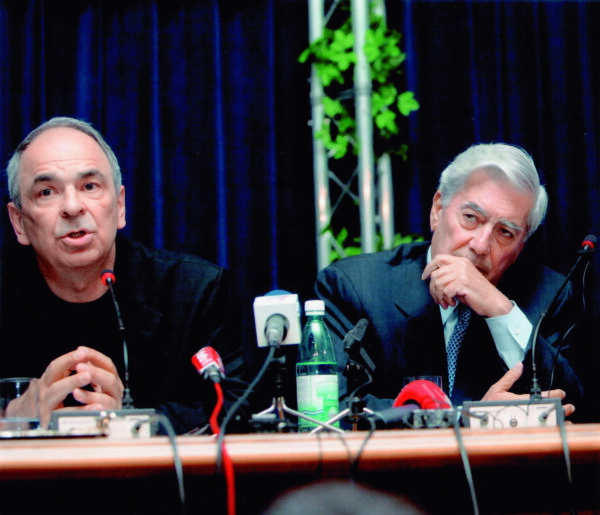
Mario Vargas Llosa had a long-standing and close relationship with Gabriel Liiceanu and Humanitas. Other major foreign writers, both European and non-European, feature in your catalogue. How would you assess Romanian readers’ interest in literature translated into their language? Is there a genuine curiosity about what is being written elsewhere?
To answer your question, I should first point out that we estimate the Romanian reading public to number no more than 200,000 people, out of a population of approximately 19 million. That figure alone says a great deal. Of those 200,000 readers, between 5,000 and 10,000 might have been interested in a new novel by Nobel Prize winner Mario Vargas Llosa – no more than that. Take an author such as Giuliano da Empoli, whose sales figures reach remarkable heights in France: here in Romania, his readership is much more limited. Fortunately, Mario Vargas Llosa and Milan Kundera, two writers I greatly admire, whose books I have championed since I first joined Humanitas, continue to have an audience despite their passing. But we must acknowledge that it is, inevitably, a small readership.
Why did you leave Polirom to join Humanitas?
At the time, Polirom and Humanitas were Romania’s two leading publishing houses. I owe a great deal to Polirom, where I learned my trade and spent several deeply rewarding years, both professionally and personally. But there comes a point in life when you feel the need to step away, not only from a place, but also from the person you once were there. I needed to turn a page, perhaps reinvent myself, and begin a new chapter in my life. Joining Humanitas in Bucharest gave me that opportunity.
I retain a deep affection and profound respect for Polirom and the people who work there. And whenever I come across a new edition of a book I published during my time there, I feel that I left something behind, something that continues to live on.
In 2004, Bernard Pivot came to Iași to film a television programme. I was fortunate enough to spend a great deal of time with him during his stay. His words of encouragement and our conversations left a lasting impression on me. Perhaps they gave me the courage to take a step I was already inwardly prepared to make.
So you were joining a publishing house that had been in existence for fourteen years and that had weathered the powerful, often contradictory, difficult and even dangerous currents sweeping through the early years of Romania’s young democracy. Twenty-two years later, in 2026, has Humanitas’s image changed?
Yes and no. The Humanitas catalogue has evolved considerably. Political realities, the economy and readers themselves have all undergone profound changes over time. The hard core, the “golden core”, of the catalogue remains as strong as ever. However, the publishing house and its editors quickly developed the instinct and the understanding that new writers had to be added to the emblematic figures of the Romanian cultural renaissance who accompanied Humanitas’s birth. I am thinking above all of Mircea Eliade, Eugène Ionesco, Constantin Noica and Emil Cioran. Some of their books, which had been banned under the Ceaușescu regime, sold more than 200,000 copies in the 1990s. Such figures are unimaginable in contemporary Romania, which has to be said, since it is a significant demographic factor, has experienced a substantial decline in population and has consequently lost a large number of potential readers.
We continue to encourage readers to rediscover the towering figures of the twentieth century, particularly Noica and Cioran, but also Gabriel Liiceanu and Andrei Pleșu. But my responsibility, like that of the various editors at Humanitas, has been to commit ourselves to bringing other authors to the fore.
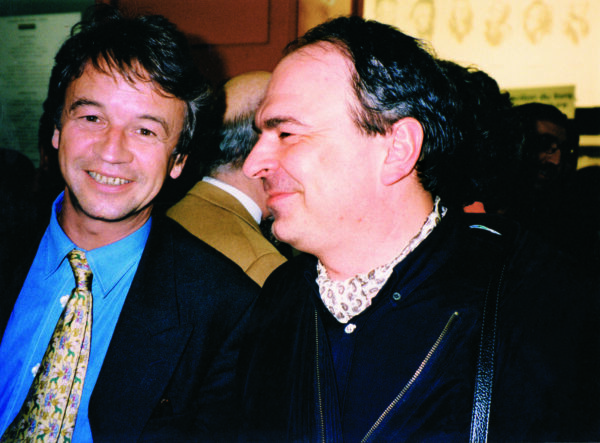
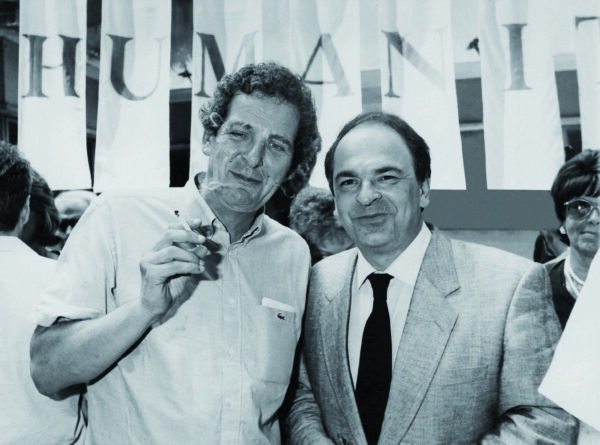
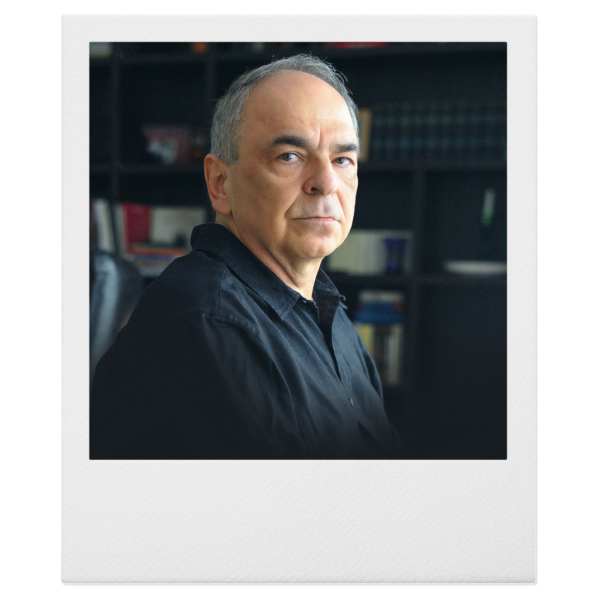
Thanks to you, I discovered a text by Andrei Pleșu – a leading intellectual, the first Minister of Culture of post-Ceaușescu Romania, and the man who, in 1990, proposed to Gabriel Liiceanu that he take over the publishing house which had previously published the dictator’s writings, and transform it into a publishing house worthy of the ambitions of the democratic revolution and the country’s cultural renaissance. In this text, Pleșu recalls, with dark humour, the vicious attacks and all manner of defamatory accusations that Liiceanu and his publishing house have had to endure over the past decades. Have these attacks against the idea of a contemporary, European Romania, committed to critically examining the darkest chapters of its past, finally ceased? Does Humanitas still represent the enemy in the eyes of certain Romanians?
With a sense of disillusioned humour, I remember telling Gabriel Liiceanu that, because of his work at the helm of Humanitas, the values he stands for, reflected both in the publishing house’s catalogue and in his public statements, he was the most vilified man in all of Romania – even more so than King Michael, who was overthrown by the communists in December 1947 and forced into exile for forty-two years. The exiled king never had to endure the insults that Gabriel Liiceanu has been subjected to for decades. This is practically without parallel anywhere in the world!
The same accusations keep resurfacing: that he made his fortune at the expense of Romanian society, that he benefited from special privileges, that he is nothing more than an upstart, and so on. The slander has never gone away. This obsession, which grips part of the population and the political class, could be the subject of a film or a novel. For years, he was the establishment’s designated enemy. It is worth remembering that, apart from brief intervals, power has remained in the hands of former communists, many of whom have reinvented themselves as contemptuous capitalists.
One must also bear in mind that, in Romania in 2026, all television channels are privately owned. They are linked to political parties that finance them in order to secure a media mouthpiece of their own, one that will defend their lies as though they were the truth. Beyond Gabriel Liiceanu himself, we must recognise that slander carries enormous weight in Romania – even more so than in Bulgaria or Moldova.
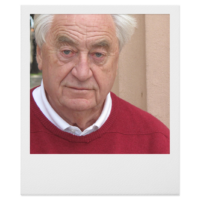
For someone with a passion for books who is now the same age you were when you took up your position at Humanitas – you were barely thirty – what does Gabriel Liiceanu, the eighty-four-year-old philosopher and publisher, represent to you?
I will answer by recounting two anecdotes. At a book fair, a fifteen-or sixteen-year-old secondary-school student approached us. He told us that he wanted to set up a kind of literary circle at his school, but that no one was helping him – quite the contrary. He was passionate about Gabriel Liiceanu, the values he stands for and the authors who make up the “golden core” of the Humanitas catalogue. Today, this young man reads Heidegger, Hannah Arendt and other demanding authors. So there are enthusiastic and passionate young people for whom Liiceanu represents a major role model, because of everything he has undertaken.
I also remember another occasion when Liiceanu was invited to meet secondary-school students at a literary festival in Timișoara. He came back full of enthusiasm about their curiosity and interest. The future, then, is not quite so bleak. It is above all for these young people that we must always find the courage to carry on, despite the obstacles, the resistance we encounter and the slander.
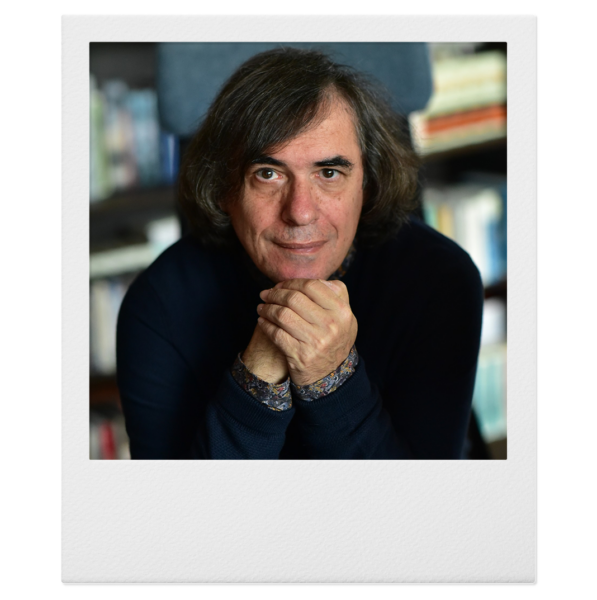
The contemporary Romanian author who ranks among Europe’s greatest novelists, and whose name regularly comes up every autumn as the Nobel Prize in Literature approaches, is Mircea Cărtărescu. In his text on Humanitas, published by DIALOGOS, we discover the depth of his relationship with Gabriel Liiceanu and your publishing house. Despite the scale of his novels and their literary ambition, he has won a substantial readership among the 200,000 potential readers you mentioned earlier in our conversation. By way of comparison with the sales figures you gave for the most celebrated writers in the “golden core”, could you tell us how many copies of Cărtărescu’s most popular novels have sold?
His body of work is on the verge of passing the one-million-copy mark, if we add together all the books of his published by Humanitas. That is, of course, a remarkable achievement. He is an exceptional case in Romania. Sales of his first books did not exceed 3,000 to 4,000 copies. Then, in 2004, his short-story collection Why We Love Women became a publishing sensation. Mircea Cărtărescu sold more than 200,000 copies. Since then, his novels have become instant bestsellers. His essays, poetry collections and diaries, by contrast, have considerably smaller print runs.
His latest essay, Existentia, a collection of reflections on literature that his French translator, Laure Henckel, is about to translate, is, in his own words, “a book about what makes my life worth living”. Since its publication last June, approximately five months ago, we have sold around 4,000 copies.
How much does a book cost in Romania? What does the price of a Cărtărescu book represent for the population?
For those who are particularly interested in his books, the price remains high. I am thinking of young people, students, teachers and pensioners.
I would like to talk to you about Moldova, and therefore about the Romanian-language cultural space beyond Romania’s borders. What does this country represent to you in the current geopolitical context? And how are the values underpinning Humanitas perceived there?
Independence and freedom of expression, particularly in relation to Putin’s Russia, are unquestionably among the values that have shaped this publishing house. We share a commitment to intellectual work that brings historical truth to light. I should, however, tell you that I make no distinction between Romanian literature written here and literature written there, between writers from Chișinău and those from our own country. The Prut River, which separates the two countries, creates an artificial cultural divide. Romanian as spoken in Moldova has undoubtedly been influenced by the presence of the Russian language, imposed by the USSR from 1944 to 1991, but this is in no way comparable, for example, to the differences between Catalan and Spanish.
Humanitas has made a major contribution to critical studies of Romania’s past. Has this work helped reshape the way the country understands its history?
If the past is given a cosmetic makeover, there is no chance of truth emerging from either the present or the future. With the establishment of the communist regime, following the king’s abdication, which I mentioned earlier, a great lie about Romania’s past took hold: the claim that Romania had become the greatest and most glorious state among all the countries surrounding it.
This, of course, meant denying the fact that, for centuries, the various provinces that today make up Romania had not constituted an independent state. By glorifying a handful of victories over the Ottomans, history was rewritten to serve the regime’s interests, while a compromising past was cast aside. The history of Romania taught under communism had nothing to do with the truth.
Humanitas therefore undertook a genuine intellectual and political mission: to encourage historical reflection on our country through the publication of essential essays, some of which caused outrage among certain quarters. This also included the entire body of historical research into Romanian communism and the violence inflicted on the population by the regime and the Securitate. It was this work that earned Humanitas the vehement hostility of those who refused to confront this examination of the recent past.
Do you feel that this editorial work on your country’s history has borne fruit?
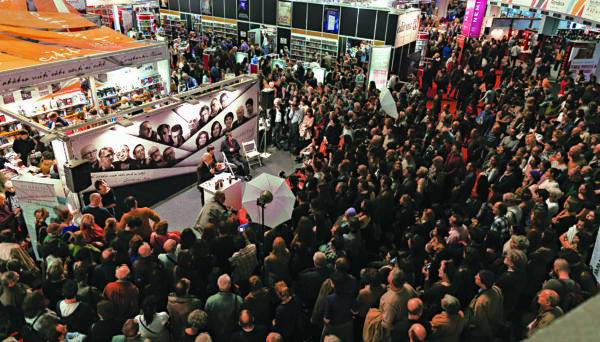
Allow me to indulge my pride and answer in the affirmative. And I would like to add something: over time, Humanitas has become much more than a catalogue of authors and titles. It has become an institution. A free and independent institution, receiving no subsidies and relying entirely on its commercial performance. We have created Humanitas bookshops, where we organise numerous events; a series of lectures on the world we live in; a general knowledge competition for secondary-school students; and the Humanitas Foundation, which awards scholarships and owns and manages the Noica chalet in Păltiniș, among other initiatives.
Today, Humanitas is therefore not merely a publishing house, but also a range of complementary initiatives whose primary purpose is to combat manipulation, wherever it may come from.
Photo © Cătălina Flămînzeanu