
‘Thanks to poetry, I have gained access to layers of myself that I didn’t know.’¹
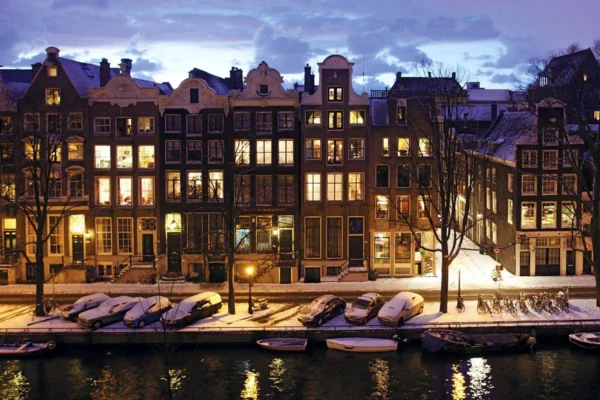
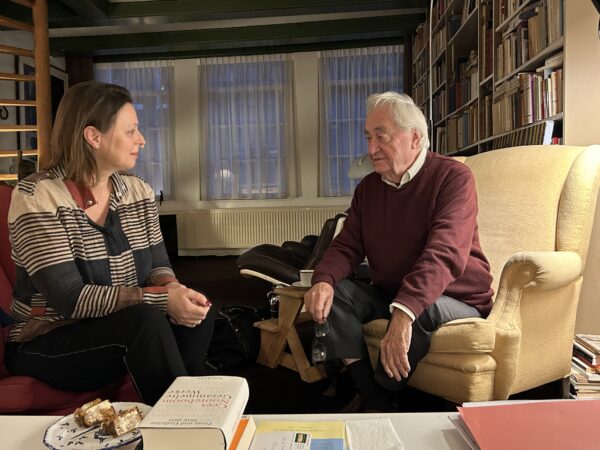
On a January day in 2023, I walked along the Amsterdam canals to the home of Cees Nooteboom, a historic building dating back to 1734, to which he returned time and again over the years, only to depart once more. He had recently arrived from ‘the island’ – Menorca – for Christmas, and in a few days, he would be off again for southern Germany, where he spent the winters. Where the fox appears, as in the title of his last collection, written during the pandemic.
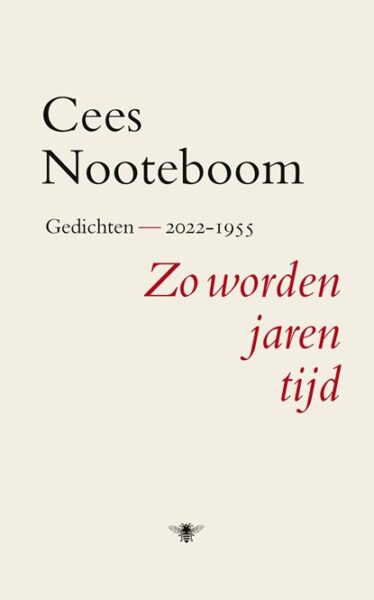
I was visiting the writer and traveller to talk about his poems. ‘They are the essence,’ he said, ‘the place where emotions and thoughts can emerge unfiltered from the depths.’ That is how things were back in 1955, when he wrote his first poems as a young man of 22, and things were still the same on that day in 2023, when he was almost ninety years old. All of his poems, around six hundred in total, had just been collected in Zo worden jaren tijd (How Years Become Time). From recent to old, without selection or alteration, because ‘why should a man of 88 remove the poems of a 22-year-old fellow poet, even if they do happen to share the same name?’ as we read in the introduction. ‘I have let them stand, in their complete innocence, and with all their all too visible faults,’ the old man wrote compassionately about his younger self. Even though he still had his doubts: ‘Sometimes I can’t bear it – they’re so innocent.’
He was already sitting, ready and waiting, still that same twinkle in his eyes, with a collection of new books scattered across the coffee table. Always curious. ‘This one I’ve read. And that one – should I read that? Just take a look at this art book. You have to explore this one,’ he greeted me as if we had seen each other only yesterday, as if no pandemic had taken place since our last encounter. On the floor above, where he worked, he once showed me an impressive collection of rare books about shells. I thought it strange at the time. When I reread his poetry, I understood. The natural elements, cacti, shells, stones, clouds, trees, the sea: the poet observes, notes, finds stillness in what does not speak. ‘For a conversation I wait for the owl / that measures time,’ we read. ‘I no longer listen to anyone.’
“Der Augenmensch” (literally, the eye person, someone who is visually oriented), as he has been described in Germany. Looking is at the foundation of creation – from there, contemplation emerges.
‘I have difficulty walking, so I’ll stay seated,’ said the man who had spent his entire life walking paths on all the continents of the world. He picked up the stack of paper lying beside him: the manuscript of the collected poems. ‘Such a ridiculous amount,’ he said. ‘I’ve been reading it; I thought the Zelfportret van een ander (translated into English as Self-Portrait of an Other by David Colmer) in there was quite good. Does it belong in a poetry collection? It’s poetic prose, so I think it belongs.’ And then: ‘The prospect of holding the book of my collected poetry in my hands means a lot to me.’
We spoke for hours. We both made an effort – me with my questions, and him with his answers – and it made us both smile. He was good at looking at himself as if looking at someone else, often adding a witty, self-deprecating remark. His poems, which for a long time received too little attention, were also self-portraits of the other(s) in himself, and the most essential part of his writing. ‘I could have had a thousand lives / yet I chose only one!’, as in the famous line from his ‘Getijde’ cycle (Tides, 1978).
When I sat there with him, sensing that it would be the last time, we spoke about the path to the horizon, the final stretch of the journey. ‘It may well happen in Menorca,’ he said and fell silent. That is indeed how it unfolded. One day, he left for the island and never returned.
* * *
Sigrid Bousset: In the afterword of Monniksoog (Monk’s Eye, 2016), you write: ‘How much should you tell or explain, and how many of the secrets that were necessary for the making of a work are you allowed to keep to yourself, if you believe they were essential?’ Yet that’s what we’re going to do now: talk about your poetry.
Cees Nooteboom: When rereading my poems, I have often wondered: Where did this come from? Sometimes I just don’t remember anymore. My poetry never emerges from a preconceived plan. It just comes to me. Suddenly I need to write something down. Usually, I put it aside for a while and return to it later to see if it’s still ‘valid’ – which is, of course, a highly personal criterion. The poem must then become ‘true’, or, to put it another way, reveal itself to be true. That has happened any number of times in my life. ‘Where are you going to, and where have you come from?’ Socrates asks his admirer Phaedrus. That is the essence of all poetry. I can never say: I’m going to write a poem today.
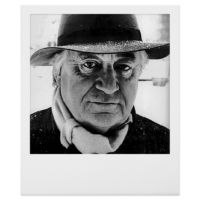
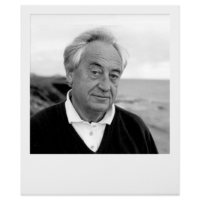
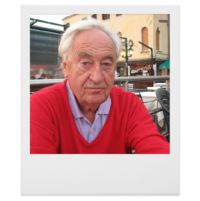
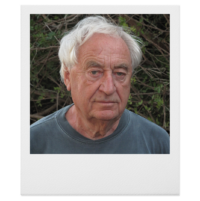
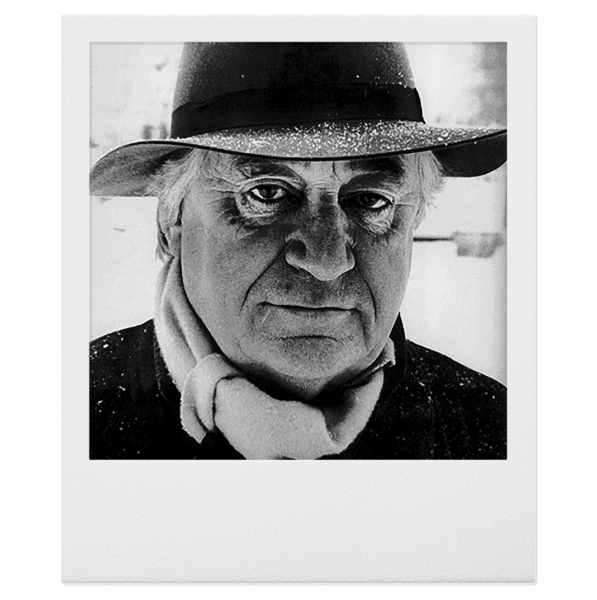
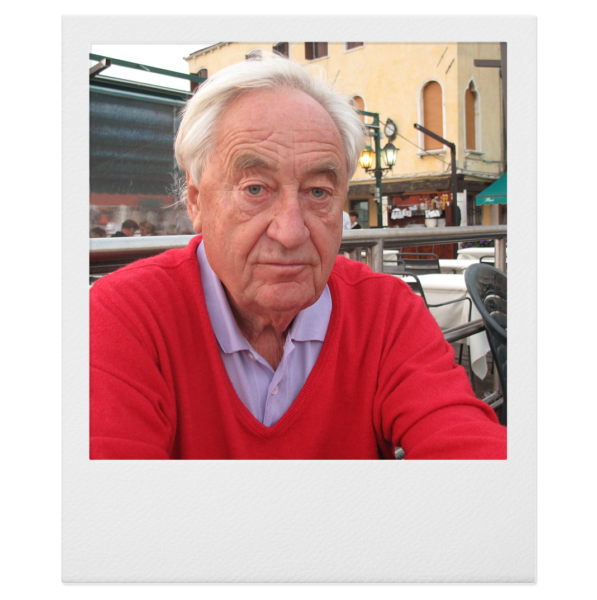
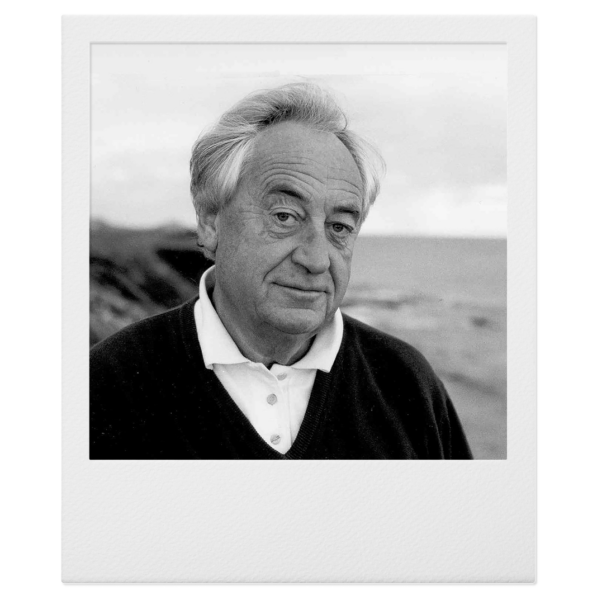
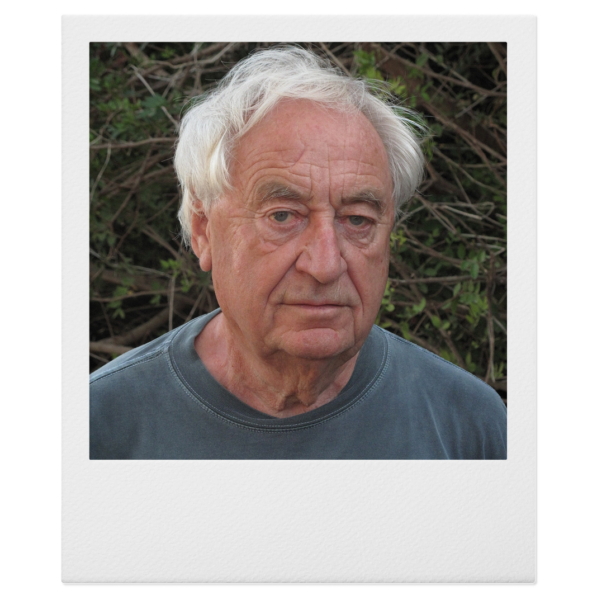
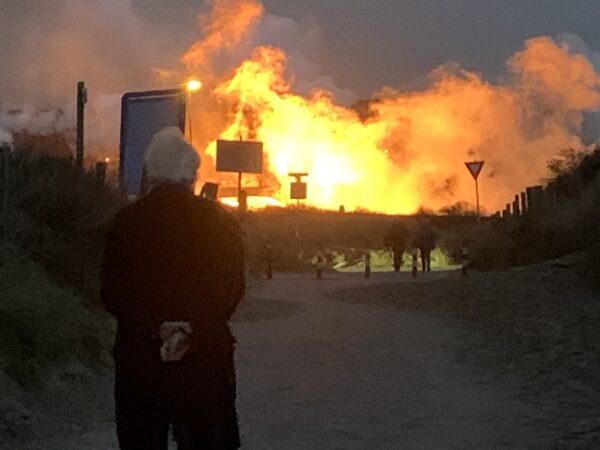
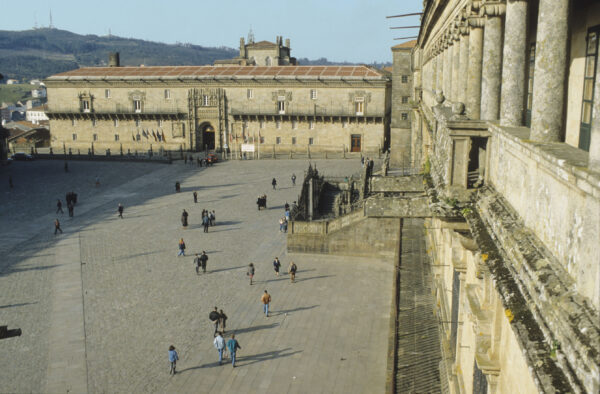
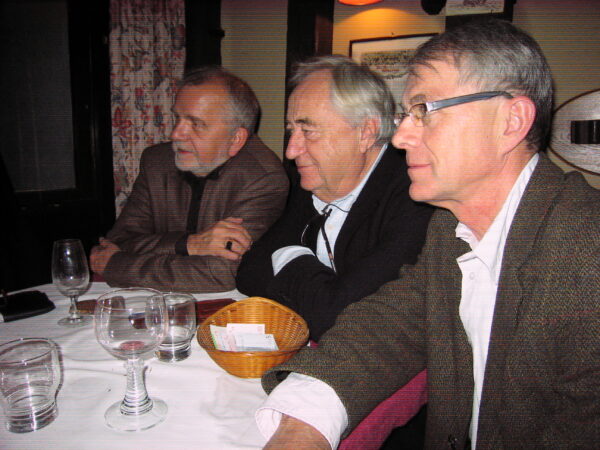
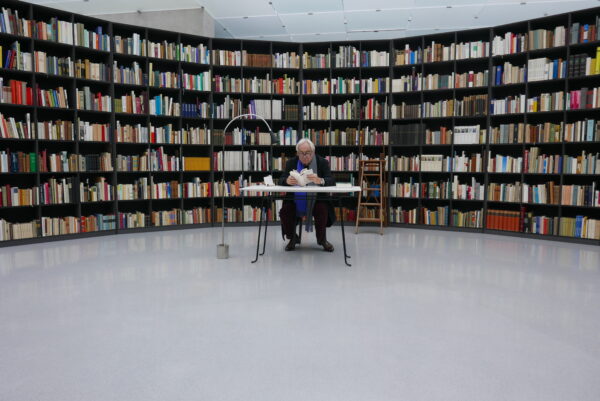
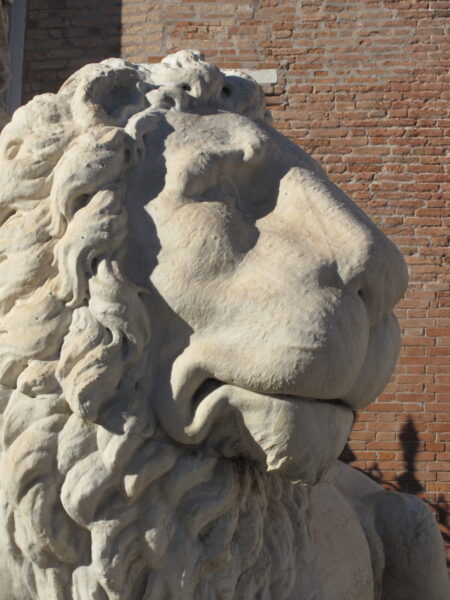
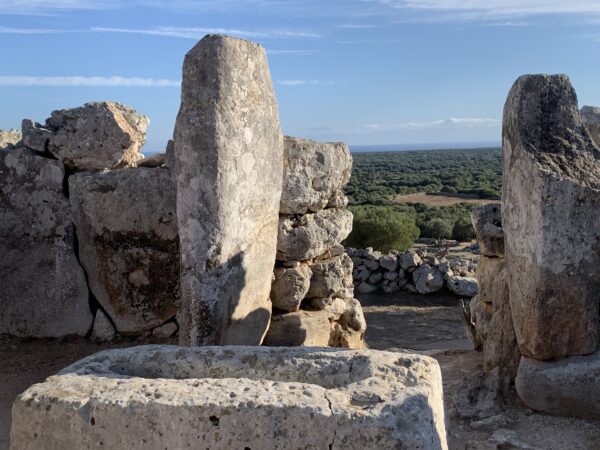
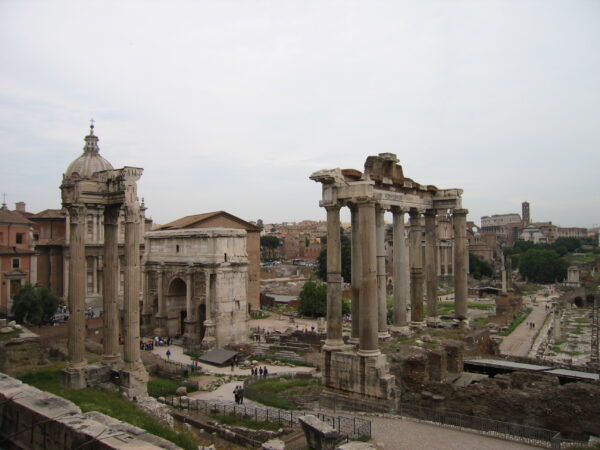
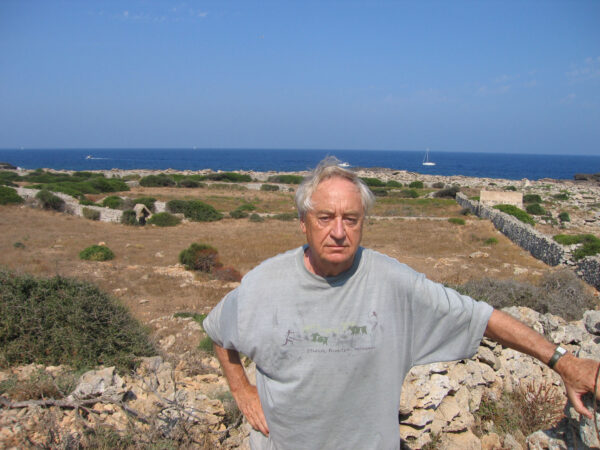
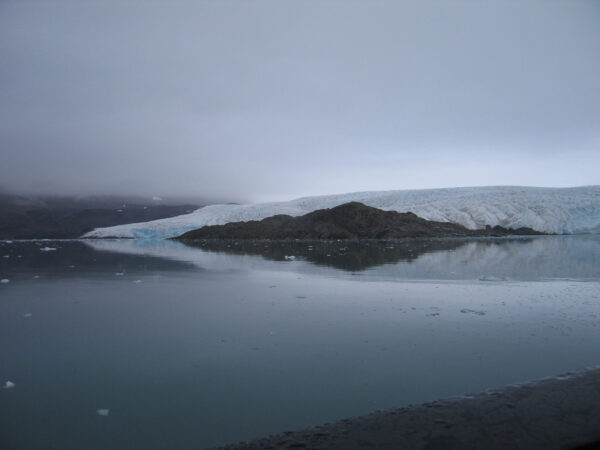
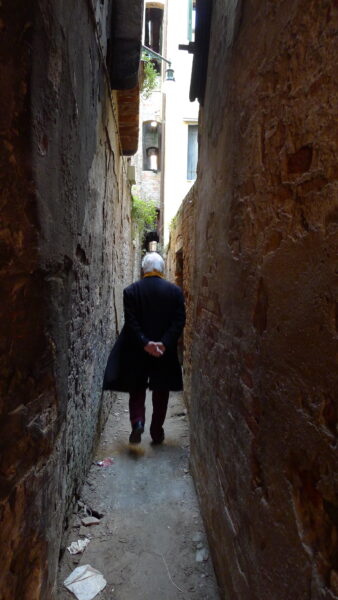
The photographs in the slideshow are by Simone Sassen.
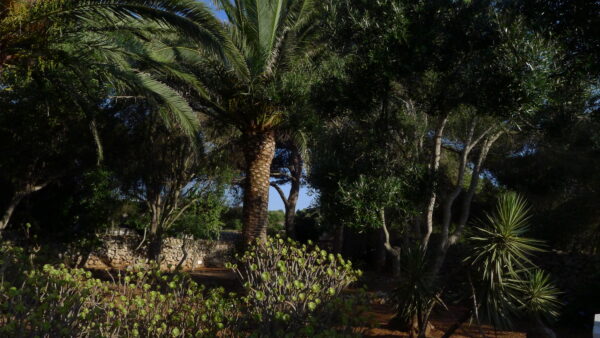
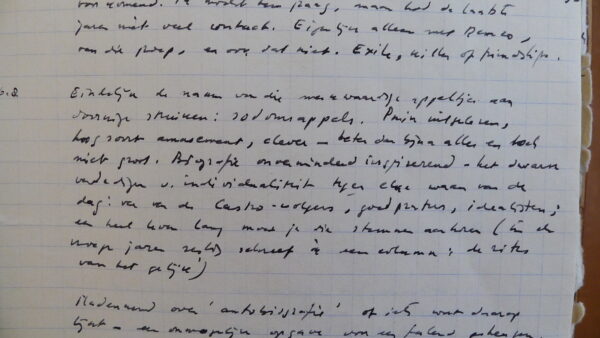
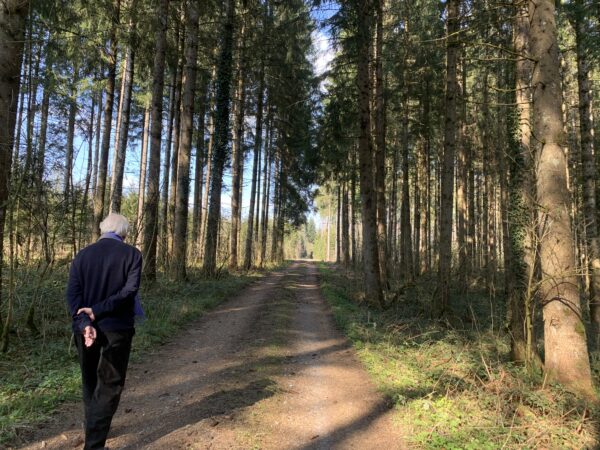
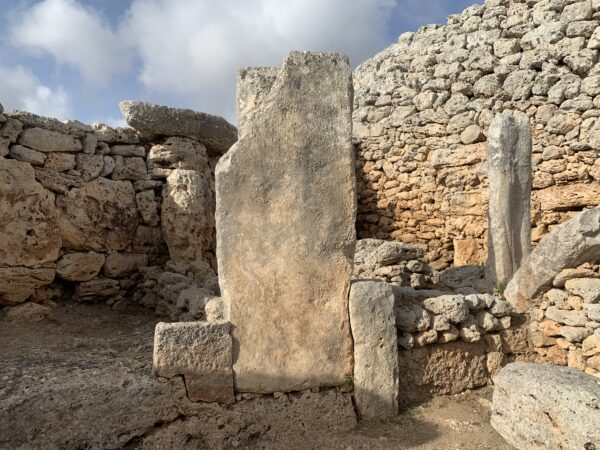
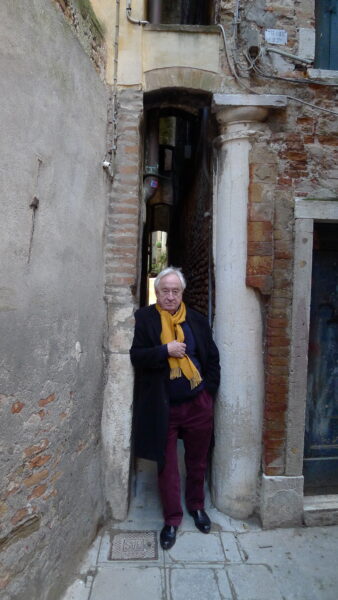
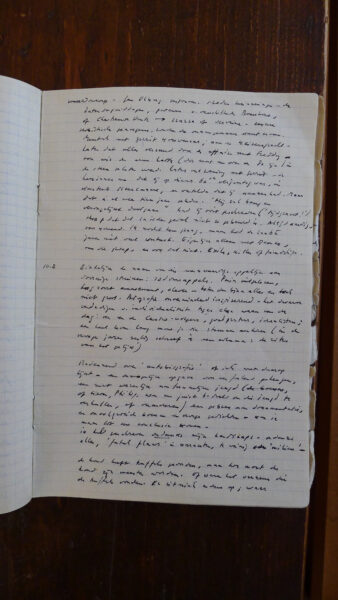
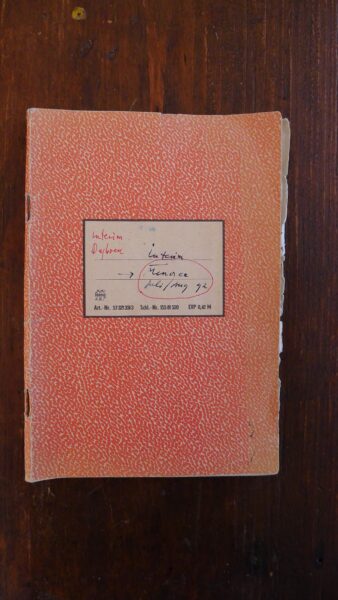
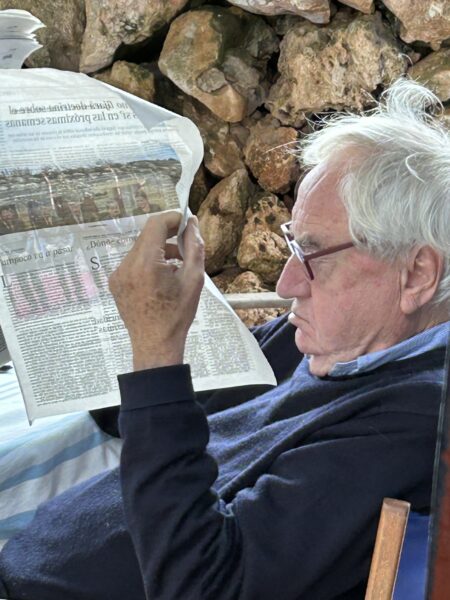
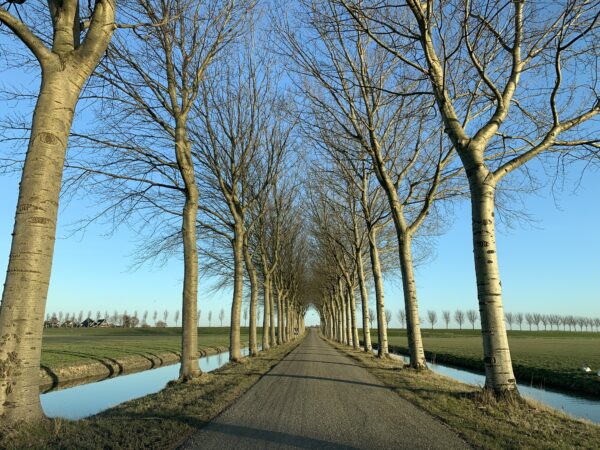
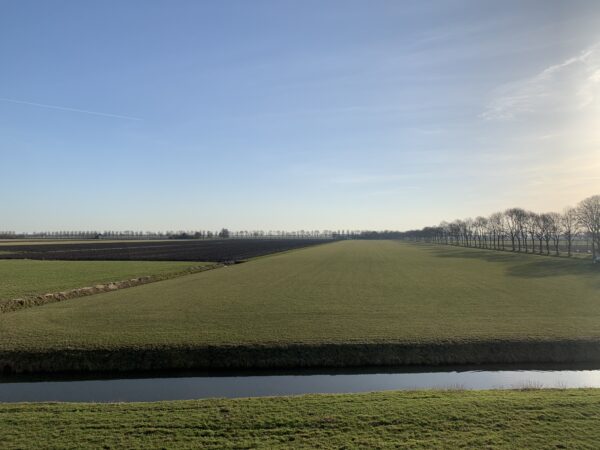
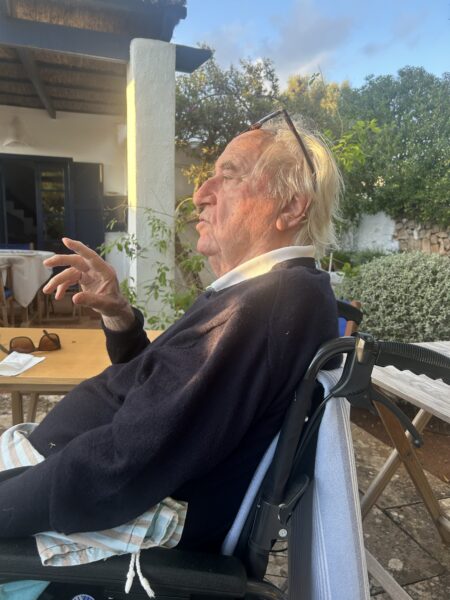
Sigrid Bousset: ‘You started in a garden, and what is described is Mediterranean vegetation, but what emerges are thoughts about the war, images from a distant past that has never truly gone,’ as you write in the afterword to your most recent collection, Vos (Fox). Your mother and your father regularly appear in your latest poetry.
Cess Nooteboom: That’s true. I’ve never written about them before. My father, that’s the war. During the Hunger Winter, he sent me to my mother in the Veluwe, where my sister and brother were also staying. On 3 March 1945, he was struck during the bombing of the Bezuidenhout district in The Hague. He lived for a while, but there was no serum, and he died of his injuries. I heard the news at my mother’s in Barneveld, but we were unable to go there. My father left a young wife behind, with whom he’d just had a child; they emigrated to Australia immediately after the war. My mother remarried a few years later, to an older Catholic man who had always lived with his mother. Years later, a Nooteboom from Australia contacted me. It was my half-brother. He wrote: ‘I’d like to know more about the man who was, after all, my father too.’ But what did I know? My mother didn’t talk about him much. Funnily enough, I was just thinking about that this morning, about the peculiar course of my life.
Sigrid Bousset: Now it’s coming to the surface…
Cees Nooteboom: The boarding school… My mother wanted me to go to a gymnasium, a secondary school with Latin and Ancient Greek as compulsory subjects. She was right about that. Latin and Greek – they have shaped my life. But the paters, the priests who taught there, didn’t want me. There was no particular incident, but I didn’t fit – others drew that conclusion for me. I was different: war, divorced parents. I had to leave the next boarding school too. Then I went to work at the Rotterdamse Bank in Hilversum and at the same time I was attending an evening gymnasium programme, which I didn’t complete. The director of the bank, a cultured man who played the piano, took me to the theatre. It was like a second education. Until I left. Hitchhiking, travelling. You know the rest. A few times, I skirted the edge of the abyss, without even knowing it.
Sigrid Bousset: ‘Father who wants to go to his grave, but he does not have one,’ you write in Monniksoog.
Cees Nooteboom: I only recently heard that there was a grave. His new wife – she had been our nanny – had him buried, we didn’t know where, we only found out about it much later. My Australian half-brother knew about it from his mother, whom I had never seen again.
Sigrid Bousset: Have you missed having a father?
Cees Nooteboom: I don’t feel that way, but then again, you never know. I only knew him until I was ten years old. It taught me to stand on my own two feet at a very young age. Most people are influenced by their fathers. Perhaps I was influenced by all those ‘paters’ – it’s the same word, after all – but they sent me away and, in doing so, changed my life. No final exams, no university, just to give a couple of examples. But I’ve never regretted it. It meant I had to find my own way.
Sigrid Bousset: ‘His father, a man in a dinner jacket on the railing of the promenade, his mother next to the future deceased […] and behind his parents, the sea,’ you write.
Cees Nooteboom: That was a photograph. Apart from that, I have almost nothing. He was born in 1897. He died at the age of 47.
Sigrid Bousset: You meet your mother on the dune path. ‘But she did not see me. She was talking to another lady, and I heard her say: Everyone likes me here.’ Beautiful.
Cees Nooteboom: It just comes to mind, and I write it down. I never met her on a dune path. It was something my mother used to say, in the retirement home. The idea of being popular was important. She liked to flirt. Whenever I was home, even if it was just briefly, I went to visit her. And I invited her on special occasions, like when I received the P.C. Hooft Prize and Hans van Mierlo gave the speech. She thought that was wonderful.
Sigrid Bousset: The last line of the poem is striking: ‘which made everything right again’. Your final lines are often surprising. They cause the reader to revisit what went before. Here, it’s as if you think the context you grew up in wasn’t entirely right.
Cees Nooteboom: That’s not how I see it myself. Although I have given it some thought. When I took my wife, Simone, to meet my family for the first time, my sister’s husband tapped his glass during the meal and said the unforgettable words: ‘I have been asked not to say anything here this evening.’ Upon which three things happened: my sister started crying and disappeared into the kitchen, her oldest son said, ‘Damn it, Dad, you’re such a dick,’ my mother also flew to the kitchen, an uncle followed to comfort everyone, and I said to Simone: ‘At least now you know what my family looks like.’ My sister’s still alive. She wants to live to be a hundred and, during every phone call, she warns me not to think about going before she does. But why would I want to live to be a hundred?
Sigrid Bousset: In your poetry, people are constantly walking on paths. Dune paths. Shell paths. Paths in the desert. In the mountains. They’re often paths leading to another side. The other side.
Cees Nooteboom: Oh really? I hadn’t noticed. I’ve done a lot of walking in my life, of course. All over the world. I was always on the move.
Sigrid Bousset: In your most recent collection, there’s a ‘Plaatsbepaling’ (Orientation), as there is in your early work, where I also found a ‘Plaatsbepaling’.
Cees Nooteboom: I’m discovering a lot today. (laughs). Are those poems both called ‘Plaatsbepaling’? Out with it!
Sigrid Bousset: In 1956, it says: ‘which foot seeks a path / where darkness stands still?’ Almost seventy years later: ‘Surrounded by many a universe, I seek my way through the hills.’ There’s an angel by your side who tells you that you’re dead.
Cees Nooteboom: Where does it come from? Is it rational? A dream? I can’t say. The image is there. I write it down, and when I read it again, I’m surprised. (silence) I’ve stopped asking myself questions about it – because there’s no need. I accept it because, as I perceive it – within my intellectual consciousness – the image has turned out authentically.
Sigrid Bousset: On the paths, there are not only angels, but also dead people walking by your side, speaking with a different alphabet, a ‘dialect of the dead’.
Cees Nooteboom: You’re confronted with the fact that all manner of people you once knew well are dead. I don’t speak with them. They speak a different language. And they appear in such images. I don’t want to attempt to explain logically where it comes from. There’s no point explaining your own images. For you personally, images have to be absolutely authentic, truthful – whatever that might mean. And no faking it because it sounds nice. In the ordinary world, as a poet, you’re a bit of an oddity, because you have an extra world, one that most people do not appear to have. Although you can never tell. Maybe they do have it and they’re not aware of it. Or it expresses itself in dreams. And they say: it was just a dream. That’s something I never think: it was just a dream. I don’t dream very much anyway.
Sigrid Bousset: It seems as though you’re practising walking the path to the other side.
Cees Nooteboom: I’ve done a lot of walking along paths in my life. In places you wouldn’t normally go. In landscapes of the kind you don’t have here. Deserts. Jungles. I remember one night in an empty spot in the desert, a terrifying solitude and a deadly silence – I have never forgotten it. Sometimes, while reading, I think: few people will be able to relate to this. I have no idea whether my poetry gets through to people.
Sigrid Bousset: Your latest collections are, in fact, particularly powerful because of their use of repetition and the post-mortem motifs. What sets them apart is their meditative intensity.
Cees Nooteboom: I’m genuinely curious about the reactions. Rational beings who know me as a pleasant, articulate person may wonder where all this is coming from. I wonder the same thing myself.
Sigrid Bousset: Until recently, you had an exceptionally busy life. Still, you seem to have created enough space for meditation. Space from which a poem could emerge.
Cees Nooteboom: What you say is absolutely right. A long time ago, I had a newspaper column in de “Volkskrant”, which was supposed to be about the here and now and politics. I stopped writing that column. To make room for those other things. Apparently, in addition to all my travel writing and novels, I have been able to save space for my poetry.
Sighrid Bousset: Did you find that space mainly on the island of Menorca, where you’ve spent time for decades now?
Cees Nooteboom: The island is dear to me. And I have the good fortune to live with someone who leaves me to my own devices. I can ask them to read what I’ve written. But there are no long, involved discussions. It’s been a strange life: on the one hand, that isolation; on the other, out in the world, cosmopolitan – with important friendships, such as with Mary McCarthy, one of the great intellectual writers of the United States. If you’re curious, you’ll find yourself in situations where you get to know people who may be remarkably significant for the nuances of your life.
Sigrid Bousset: Who else? A lot of people make an appearance in your poems. Such as Jan Hein Donner and Harry Mulisch. ‘Where does everything go?’, as you ask the angel who disappears above the abyss.
Cees Nooteboom: Mulisch was important, of course. Sometimes a little complicated, but never lacking appreciation. Donner, the chess player, writer and Mulisch’s admiring friend, was pretty crazy. He once said to me: ‘Do you know what your problem is? You don’t have a Harry.’
Sigrid Bousset: ‘Being dead is strange, all alone in the hills,’ you write about the dead. And then another of those wonderful final lines: ‘and it doesn’t get dark here.’
Cees Nooteboom: What is it? A gift? If you open yourself up to it, then it comes – and then you’ve written it. And then you look at it. With wonder. It’s like with painting. I’ve written a lot about painting. Often it’s unclear what is depicted. Things are mysterious in themselves. I never ask my artist friends: What does it mean? Over the years, my poems have become better. I have learned to get better at writing down what arises.
Sigrid Bousset: You have more expertise. You’re better at knowing what to leave out. You’re more economical.
Cees Nooteboom: I included my first poems so readers can see where it all began. With all their flaws.
Sigrid Bousset: There’s more fear in the first collections.
Cees Nooteboom: That’s right. I was briefly in therapy, but the psychiatrist thought it was unnecessary. ‘You’ll be fine,’ she said. At that time, I’d developed an intense fear of travelling, which is strange for someone who’d already travelled so much. I had to overcome that. The real travelling began after that.
Sigrid Bousset: ‘Here I take leave of my self / and then slowly become / no one.’ Will you be able to write any more poems after those lines?
Cees Nooteboom: I’ve wondered the same. It’s not my place to say. It comes without my asking for it, so it doesn’t seem entirely impossible, but maybe I’ve said all there is to say, and it’ll simply stop on its own. I still read poetry. But I don’t often find my tone in the work of others. I can tell whether someone writes good poems. But in the end, I always keep coming back to ‘my’ poets: César Vallejo, for example.
Sigrid Bousset: Who’s left? You’ve written about a lot of poets. You’ve visited their graves.
Cees Nooteboom: Nijhoff. Slauerhoff is recognition. He died young; he had so little time. I find Achterberg interesting. But he suffered from the constraints of rhyme, which meant certain forms always had to be used. Leo Vroman also appears somewhere. A poem about a visit to New York, where he lived, the subway – him waving goodbye to me. That image has remained with me.
Sigrid Bousset: Those are all Dutch poets you just named.
Cees Nooteboom: Your own language is very important. And I think Dutch is exceptionally beautiful. Why do we read so little old poetry in our own language? I’ve read Matsuo Bashō, the 17 ᵗʰ-century Japanese haiku poet, but not Vondel or Hooft.
Sigrid Bousset: When you made your debut, there was this entire movement of experimental poets. The Vijftigers.
Cees Nooteboom: Lucebert has always remained important.
Sigrid Bousset: You kept Hugo Claus and Remco Campert close to you. In 2003, you came to me with the idea of creating a poetry programme together with Hugo and Remco: reading from one another’s poetry and your own favourites. Then we did that, at the Kaaitheater. A unique programme.
Cees Nooteboom: You see, I’d forgotten about that! That was wonderful! Make a note of that. I think Hugo has been a major influence. We saw a lot of each other. I spoke at his funeral. I had dedicated a poem to him, ‘Envoi’. He got to read it before he died. He is the only one who came to Menorca. He was curious, just like me. The Flemish air that surrounded Hugo always intrigued me. I still have a lot of letters from Remco. We also wrote a collection together, Over en weer (Back and Forth), poems with long intervals between them. When I read them now, I miss him, the sound of his voice.
Sigrid Bousset: In 1978, when you received the Jan Campert Prize for Open als een schelp, dicht als een steen (Open Like a Shell, Closed Like a Stone), you said: ‘Everyone has fathers in poetry, but mine do not live in the Netherlands.’
Cees Nooteboom: My fathers are Wallace Stevens, César Vallejo, Jorge Luis Borges. I once heard Borges speak in London. It made a big impression on me.
Sigrid Bousset: You recognise yourself in his poetics: ‘poetry is bestowed upon the poet. With the verse, he must construct his universe.’ To quote Nooteboom: ‘The poem is a cosmos, / the world a word.’
Cees Nooteboom: Did I write that? I don’t know my poetry by heart.
Sigrid Bousset: How do you think that your memory makes its selections?
Cees Nooteboom: I think that where I close off a part of myself – that’s where those poems are. Otherwise, they wouldn’t come anymore. It’s another agency, deep within me, that processes things differently. They’ll eventually come out anyway, if they really have to.
As a boy, I regularly cycled past Kasteel Groeneveld in Baarn – I had to take money to ladies on behalf of the bank – and I would think: That is the world. Who might live there? Later I lived there myself, briefly. When I cycled further, into the woods, there was a spot where I would go to think. That ‘thinking’, it was writing, as I only recently realised. When I went hitchhiking, I travelled with French, Spanish, German truck drivers. That was my further education: languages and a real world. With other languages, you enter other communities. I made friends, who are all dead now. Because of them, you mutate into other personalities. Other social settings. It’s as though you yourself come from nowhere. That’s interesting, too. You can adapt. Higher, lower, wider, narrower. I made my living from travelling, from writing travel stories. But the constant has been poetry. Sometimes nothing for a long time. And then another collection. That would elicit slightly strange reactions.
Sigrid Bousset: That aside: ‘It’s as though you yourself come from nowhere.’ That seems fundamental, doesn’t it? The fact that you feel that way?
Cees Nooteboom: Your father isn’t around, so you don’t have that social background. Then your mother comes along with another man who’s extremely Roman Catholic. You have to relate to that. Then you go and work in a bank. Then hitchhiking, with truck drivers. Who are you then, in reality? My life with Liesbeth List, for some years, the world of the theatre, so different. The house here. The house on the island.
Sigrid Bousset: As you just mentioned Liesbeth List: there aren’t many love poems. Now and then a ‘she’ appears. Most of the time it just passes, or it’s out of reach.
Cees Nooteboom: Maybe that’s not what my poetry is about.
Sigrid Bousset: Why is that?
Cees Nooteboom: It simply doesn’t come up. Love poetry is a genre in its own right. Now it sounds as if my poetry revolves around my ego, but that’s not the case. It’s a mixture of time and something else. Tiefere Bedeutung – deeper meaning. But that sounds so awful. Essence. Of what it is to be. (silence) Your circle becomes smaller and smaller. You no longer want everything either. I don’t go to the pub anymore. No distraction. Nowadays I often think: the day is so long.
Sigrid Bousset: How strange to hear you say that – you who were always so incredibly busy and used to list on the phone where you needed to go, all the things you were going to do. I used to wonder: when does he ever write?
Cees Nooteboom: Sometimes someone would say: you should make better use of your time. But do you see my collected work here, in German? Eleven volumes. Of course, it could have been even more. But is that necessary? And poetry occupies the most important place in that collected work. That’s where my authentic self is. They’ve never quite understood that here in the Netherlands.
Sigrid Bousset: Does a poem have to be clear? In 1964, in your Gesloten gedichten (Closed Poems), you had ‘no need for clarity’. ‘I close the secrets.’
Cees Nooteboom: It was a plea for the hermetic. It felt authentic at the time. And so you publish it, while the other, more lucid part of your brain has already grasped that you’re leaving your readers standing before a closed door.
Sigrid Bousset: You stand by the tomb of Hafez, somewhere in Iran, and become receptive to his poetry.
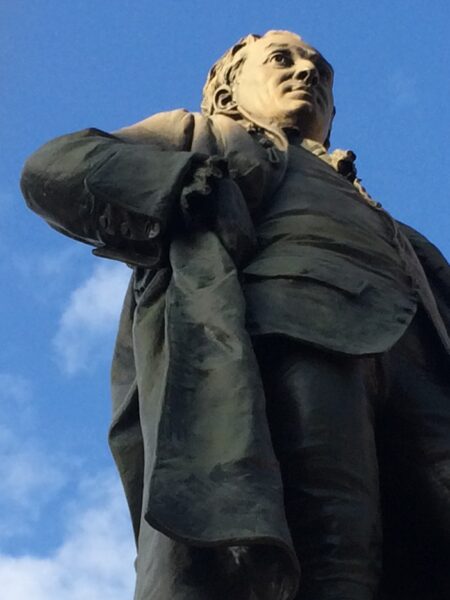
Cees Nooteboom: ‘Goethe wrote about Hafez, but by that tomb I understood him better,’ I noted. That really is how it was. Same thing at Vallejo’s grave. There’s a reason why I wrote a book about writers’ tombstones. You stand by a stone, by a life that’s over, because you are fascinated by the fact that it’s no longer there. Van Ostaijen with his ‘prince’s grave’. Slauerhoff’s final resting place. They should put me near him. Although… Everyone’s lying together there, anyway… Ah, nonsense.
Sigrid Bousset: Yes? Because maybe visiting all those graves has given you an idea?
Cees Nooteboom: Yes, and at the same time the opposite is true. No tomb. Into the air. It may well happen in Menorca. Then just let me fly. But that’s not for us to decide. Contemplating that is a higher form of romanticism. You’re just dead and gone. And in x number of years’ time, you’ll be even more gone. Hugo Claus has no grave. Not that I know of. He’d suddenly disappeared when we came out of the ceremony at the Bourla. I saw an empty hearse and thought: Where is Hugo now?
Sigrid Bousset: Perhaps it doesn’t matter to you whether people will visit your grave. But maybe it does matter that people will pick up this collected poetry.
Cees Nooteboom: Absolutely. You write to be read. Even though it’s all relative. It’s quite something when a collection comes out. Should I have left out those first poems after all? Growing old is a very strange business. I can tell you that. The last poems are much better than the earlier ones.
Sigrid Bousset: What do you believe is the evolution in your poetry?
Cees Nooteboom: Purely from a technical standpoint, you could say I began to get a better grasp of how to handle language. Because you’ve come to know language in all its different forms. I’ve translated. Written plays. Columns. Correspondence. Diaries. The instrument of language grants you more and more access to the unknown. That deeper layer of oddness. And the fact that it’s not nonsense. Thanks to poetry, I have gained access to layers of myself that I didn’t know. What am I saying there? What exactly does this mean? I found support in T. S. Eliot, who said somewhere that he didn’t always understand his own poetry. Vallejo is also pretty incomprehensible at times. Poetry is a plea for the authentic, which is incomprehensible.
Translated from Duch by Laura Watkinson.
Dialogos wishes to express its warmest gratitude to Sigrid Bousset for her support and recommendations during the creation of Galaxie Cees Nooteboom.
Notes
¹ Sigrid Bousset’s interview with Cees Nooteboom was originally published in the March/April 2023 issue of Poëziekrant, a Dutch poetry magazine founded in 1976 that comes out six times a year, featuring interviews, reviews, essays and poems.