
A little over forty years ago, new names began to emerge on the European literary scene, hailing from a region – the Netherlands and Belgian Flanders – that had until then aroused little curiosity among foreign publishers. Novelists and poets alike, these writers shared the experience of the Second World War, which had profoundly disrupted their lives in different ways, whether they were young adults, adolescents or children at the time, and which continued to haunt their work.
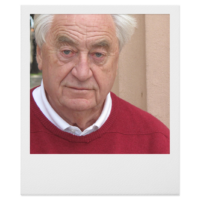
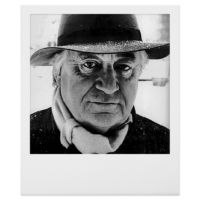
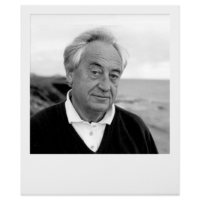
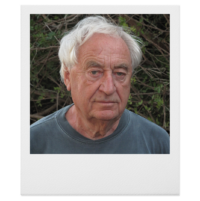
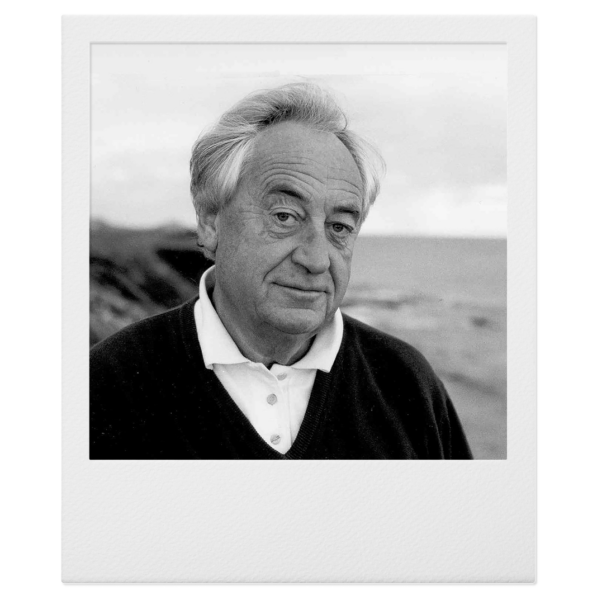
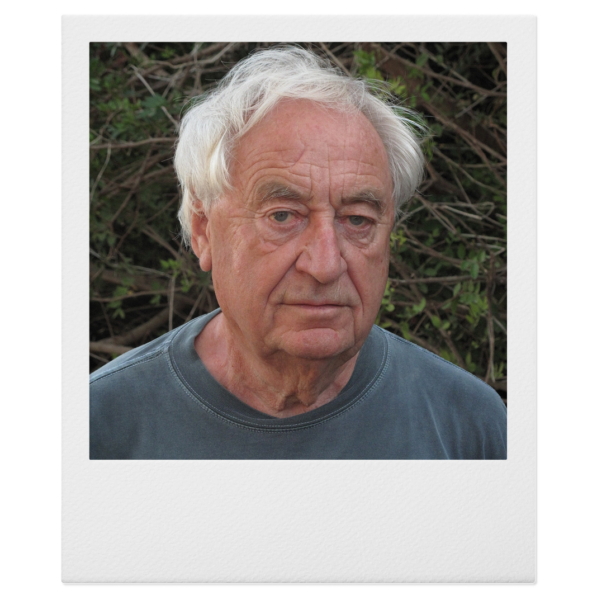
Among this group, which included such distinguished figures as Hella Haasse, Gerard Reve, Willem Frederik Hermans, Harry Mulisch and the Flemish writer Hugo Claus, Cees Nooteboom, born in 1933, was the youngest. He was also the last survivor, living until the beginning of this year, 2026, and the one who achieved the greatest international renown.
A Protean Spirit, Yet True to Himself
“The migration of souls does not take place after death, but during our lifetime.” It was in these terms that Nooteboom, an avid reader and a writer of aphorisms, described the successive transformations wrought in us over the years by our lived experiences. The words could hardly apply more aptly to anyone than to Nooteboom himself. A wandering young writer, a worthy representative of the Beat Generation in the 1950s; a foreign correspondent and travel writer, quick to capture the spirit of the times during the turbulent 1960s and 1970s; a prolific and inventive novelist, playing with the conventions of postmodernism in the 1980s; a keen connoisseur of Germany and a leading intellectual authority across the Rhine after the fall of the Berlin Wall; a European literary celebrity and perennial bookmakers’ favourite for the Nobel Prize at the dawn of the new millennium, while at the same time exploring new literary forms; and, finally, tending his garden on the island of Minorca during the last decade of his life, expressing himself chiefly through poetry and his journal – the metamorphoses of this modern-day Proteus seem endless. The writer himself was aware of this diversity and sometimes felt the need to insist upon the constancy of his innermost nature. Thus, in his journal, on 18 March 1997, he writes:
At what point, beneath the surface changes, does one cease truly to change? Can I still believe (or disbelieve) anything other than what I believed twenty or thirty years ago? The definitions become more precise, that is all. “The will to endure” (Jünger): I have always had it; my writings bear witness to this. The obsession with time (which goes hand in hand with it), too. Admiration for extreme (read: ascetic) lives – monks, travellers: constant. Places of contemplation, Japanese gardens, deserts: never changed. Aversion to dogmas, to systems. A combination of profound compassion and disgust for profiteers and demagogues. All this can be stated once and for all, with lucidity.
The art of expressing what matters most in a few words: in this lapidary self-portrait, the writer not only describes his own idiosyncrasies but also, in passing, points to the recurring themes of his work. Indeed, one cannot but marvel at the profound coherence of sixty-seven years of literary creation across such a wide range of genres: novels, poetry, plays, travel writing, and essays on the visual arts, music and literatures from around the world.
The Dancer and the Monk
A fascination with extreme ways of life, coupled with a distrust of all dogma: this is the very contradiction that lies at the heart of the magnificent novel Rituals (Rituelen, Arbeiderspers, Amsterdam, 1980), perhaps the writer’s most personal work of fiction, and certainly the one closest to his innermost nature. Its anti-hero, the Epicurean Inni Wintrop, charts his own winding course through the pleasures and temptations of the waning twentieth century, while witnessing the tragic fate of two men, father and son, Arnold and Philip Taads, whose thirst for perfection, discipline and asceticism leads them gradually to strip themselves of every attribute of life, and ultimately of life itself. Fully aware that these contradictory impulses coexisted within him, Nooteboom embodied them in two figures who took turns inhabiting him, sometimes even simultaneously: the dancer and the monk. The dancer is the traveller, curious about everything, forever wanting to discover what lies “beyond the hill”, eager for intellectual and amorous encounters, and for aesthetic experiences of every kind. The monk, by contrast, defined by the “stability of place” which his rule forbids him to leave, is the image of the writer withdrawn into his scriptorium, for whom experience of the world acquires meaning only through the written trace it leaves on the page.
But the monk is also, in a more literal sense, the image of the religious figure who recurs time and again in the writer’s imagination, as it does in the paintings of Caspar David Friedrich, one of his favourite artists. Born into a Catholic family originating in the southern Netherlands – a region culturally closer to Belgian Flanders or the German Rhineland than to Calvinist Holland – the young Cornelis (“Cees”) Johannes Josephus Maria Nooteboom was so deeply marked by his schooling under Franciscan and Augustinian fathers that, around the age of twenty, he contemplated entering the religious life himself. Did he have faith? He says nothing on the subject; perhaps he was simply seeking the order and peace that eluded him in the outside world. In any event, he left the monastery after just a few days, but throughout his life never ceased to visit monasteries. They are ubiquitous in his writings on Spain, in his tireless journeys along the paths of the Camino de Santiago, in his novels and in his monographs, such as the one devoted to Zurbarán. The culture he inherited from the Catholic tradition remained a constant companion in his reflections on the history of European art. In 2019, when his last major travel book, Venice: The Lion, the City and the Water , was published, one Dutch critic sighed: “How fortunate to have a Nooteboom at hand to explain to you what no one knows any more.”
The “places of contemplation” were something the writer sought to the very ends of the earth, in Japan in particular. In the early 2000s, he went so far as to undertake a pilgrimage to the thirty-three temples surrounding Kyoto, which he recounted in Saigoku, a book magnificently illustrated with photographs by his wife, Simone Sassen. For Nooteboom, these sanctuaries embody the very essence of Japan. Ever since his first visit in 1976, the country had held him spellbound. A place of serenity, certainly, but also of modernity and otherness, Japan inspired the melancholy short story Mokusei!: A Love Story, the chronicle of a love doomed to failure, as well as most of the pieces that make up his major collection of travel writings on Asia and the Far East, The Rose of Spring.
Yet his encounter with a culture and literary tradition so remote from his own left a deeper mark on the writer. It was in composing, in 1988, a cycle of tributes to the great classical poet Bashō that Nooteboom articulated his own poetics. The old master, he writes, “makes a book with his eyes”, translating “the eye’s kiss into the constraints of words”. But, he warns, we must beware of falling into “the pernicious traps of whimsy and cooing”: what we must do is polish “stones that gleam and hurt”. Only then will the poet be able to ensure that “what has disappeared remains as something that has disappeared”. A poet of the visual, a nomadic poet “on the road to the north”, who gives voice to the world without ever settling in it; a “lapidary” poet in every sense of the word: in the mirror of the great classical master of haiku, Nooteboom found himself.
The Obsession with Time
Rüdiger Safranski has called the aphorisms that unexpectedly surface in Nooteboom’s stories and novels “flashes of insight” (Geistesblitze). Many of them have to do with time, memory or history. “We shall never be able to imagine as much future as we have past.” “The number of lives inhabiting an ageing body is unbearable.” “Oblivion is the absent brother of memory, a false couple that rules, with the utmost arbitrariness, over what we believe we possess.” “What is curious about the meaninglessness of History is that one can always find an explanation for it.”
The writer’s most ambitious novel, The Day of the Dead , opens with a reflection on the word “history” in German and Dutch. It is surely no coincidence that this reflection is set in Berlin, the epicentre of twentieth-century history, where Nooteboom – by happy chance or through some premonition? – spent the whole of 1989 and continued to stay for much of the following decade. He captured better than anyone else the atmosphere and spirit of the newly reunified city, whose face was still covered with scars. The writer scrutinised that face not only in this novel, but also in numerous accounts and essays written over the two decades following the fall of the Wall and brought together in Roads to Berlin: Detours and Riddles in the Lands and History of Germany If he achieved his greatest successes in Germany, where he enjoyed unrivalled popularity, this was also because German intellectual culture and philosophical tradition, which his friend Rüdiger Safranski helped him discover, probably resonated more closely than any other with his own meditation on the nature of time.
Time is a destructive force: dispossession, the disappearance of a loved one, bereavement – these are experiences shared by most of Nooteboom’s characters. The narrator of The Knight Has Died attempts to reconstruct the final days of a deceased friend; Arthur Daane, in The Day of the Dead, lives with the ghosts of his wife and son, killed in an accident, and narrowly escapes being murdered himself; the protagonist of The Following Story even addresses us from beyond the grave (the dead, incidentally, often speak in Nooteboom’s work, particularly in his poetry). Why, then, do these dramatic destinies so rarely convey a sense of tragedy? Because, for this writer, what is said matters less than the way it is said. He was wary of fiction and even made this distrust the subject of an amusing novella, A Song of Truth and Semblance . More than a storyteller, the novelist Nooteboom is a narrator: whether addressing us in his own name or speaking behind the mask of a character, his voice is unmistakable. And that voice comments on the stories even as it tells them. The commentary creates distance, and it is within that space that irony and humour take hold. The writer has imagined unforgettable narrators: Tiburón, the civil engineer, in In the Dutch Mountains , and Herman Mussert, a former teacher of Latin and Greek, in The Following Story . They delight us with their self-deprecation, their feigned naïveté, and the gaze they cast upon things and people, at once fanciful and penetrating. It is this tone that gives unity to a major body of work in which distinctions of genre ultimately fade away. Whether novelistic fiction, essay or travel writing, it is the same vision of the world, translated into words through the same inventive use of language.
From the Novel to the Journal
In the early 2000s, the writer had two major narrative projects in mind: a chronicle of the adventures of Queen Urraca, a fleeting character in The Day of the Dead, set in twelfth-century Spain; and a family saga that he intended to situate in Mussolini’s Italy. He immersed himself in reading on both subjects and even undertook preliminary research on location, for this was his method: to absorb as much knowledge as possible about a given subject, then move straight into writing, without any real pre-established plan. Yet neither novel ever came to fruition, and we do not know precisely why. If I were to venture a hypothesis, I would say that the moment had passed. Quietly, perhaps even unbeknownst to the author himself, his work was evolving towards other forms, less structured, more open-ended, perhaps better suited to the restless mood and turbulent beginnings of the new millennium. Then, quite suddenly, from 2006 onwards, a fresh creative flowering took place – much as it had in the early 1980s. Each year brought a new book, and each book was different from its predecessors: Tumbas, in which Nooteboom pays homage, in poetry and prose, to the figures who make up his literary pantheon, and literally goes on pilgrimage to their graves ; Red Rain, in which he offers us, unvarnished, fragments of a deliberately light-hearted autobiography ; The Foxes Come at Night, a collection of a handful of magnificent short stories, a genre he had abandoned in the late 1950s . In doing so, without ever explicitly saying so, he was bidding farewell to fiction, to which he would never return.
Poetry, too, once again found its way into his work. As Nooteboom repeatedly emphasised, a poem cannot be summoned at will: it comes, it happens to you. The re-emergence of the poetic spring in the evening of his life is all the more striking for that. Licht overal, or Light Everywhere (2012), gathering the harvest of a decade, was followed by two slimmer, more private collections: Monniksoog, or The Monk’s Eye (2016), in which the poet revisits his own past and that of his family in a series of vignettes; and the deeply moving Afscheid, or Farewell (2020), composed during the pandemic .
But the two works that most characteristically embody this final phase of his literary career are undoubtedly Letters to Poseidon and 533: The Book of Days . Great artists, in the later stages of their careers, often free themselves from established conventions in order to draw closer to the very heart of their aesthetic truth. Nooteboom admired those books in which an author, enjoying complete freedom, sets down all manner of reflections without any apparent order. He frequently referred in this connection to Leopardi’s Zibaldone and Lichtenberg’s Waste Books (Sudelbücher). Following in their footsteps, Letters to Poseidon brings together miniature philosophical essays (the letters addressed to the Greek god), prose poems, travel impressions, scenes from everyday life and reflections on current affairs, all accompanied by illustrations and notes.
The case of 533 is even more revealing: the title simply refers to the period during which the book was written, from August 2014 to the first weeks of 2016 – exactly 533 days. It is therefore a journal, but one without dates, stripped down to essentials, giving ample space to reading and memories, but also to cacti, palm trees and agaves, to spiders, butterflies, tortoises and lizards, to the natural world of the island of Minorca, the depths of the sea and the cosmos, all summoned here into a state of serene contemplation. “I am a fellow creature of everything that lives,” says a character in Rituals – and this was an excellent self-portrait of the author himself.
The Will to Endure
With Letters to Poseidon and 533, Nooteboom’s published work had finally converged with the journal he had begun keeping in the early 1970s, and which, over the decades, had become an indispensable part of his writing practice. His literary œuvre is now complete and, as with any writer who has passed away, the question arises of what will survive of it. Nooteboom had reflected at length and with great depth on the implications of his own absence, in a metaphysical sense – for his poetry is woven through with questions of being and non-being – but also, more prosaically, in terms of his literary legacy. He did not wish to leave us: his “will to endure” was surely not unrelated to the decision, taken in the final years of his life, to publish his journals.
Spanning more than fifty years, they began appearing in the Netherlands in 2023, with the edition scheduled for completion next year. What do they have to tell us that his published work has not already revealed? They tell us relatively little about his private life, but much about his public life, his countless travels, his encounters and friendships; they also offer an irreplaceable chronicle of his literary creation. Above all, however, they take us back to the very sources of that creation: they reveal the writer’s extraordinary thirst for knowledge, his voracious reading in five or six languages (“Oh, to have a second life in which to read!”, he sighs), and his genuine admiration not only for the greatest writers, but also for newcomers in whose work he discerned a fresh voice, and whom he often helped to make themselves heard. If he knew the world from having travelled through it more extensively and more perceptively than so many others, literature was perhaps, in his eyes, more important than the world itself. To explore both, he believed, was the finest thing a human being could do: “to look out over the edge of one’s own existence” .